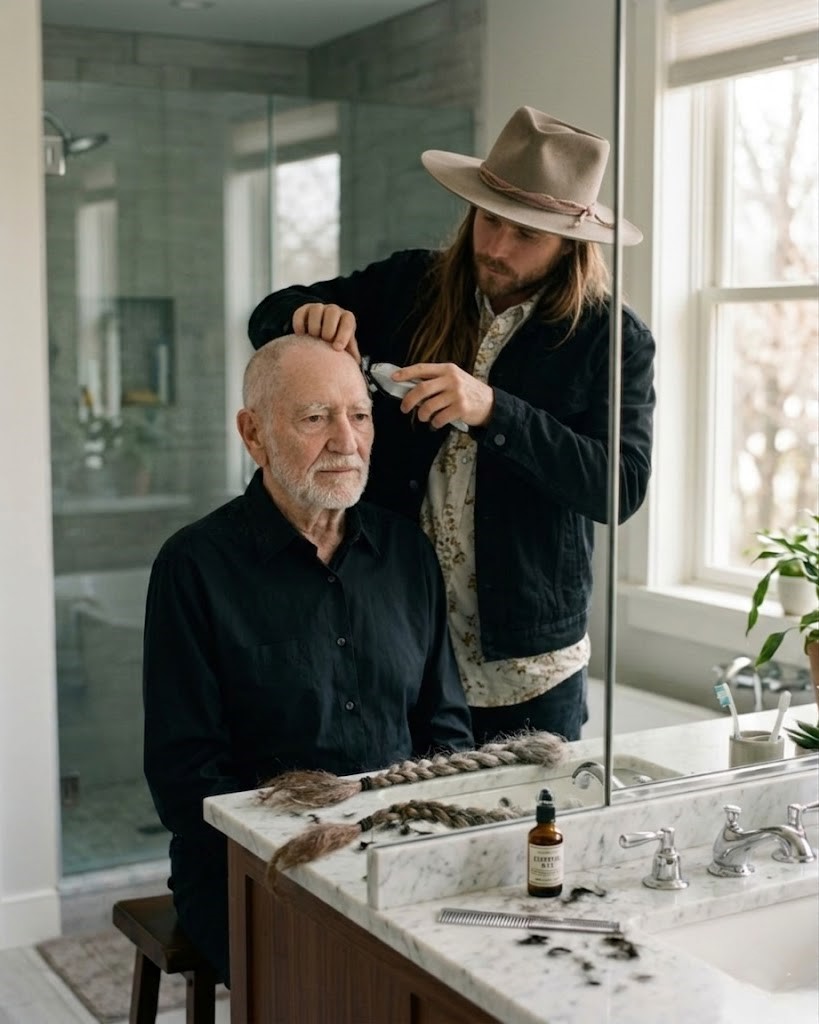
Two red braids. A simple ribbon. A story so strange and personal that it could only belong to Willie Nelson and Waylon Jennings.
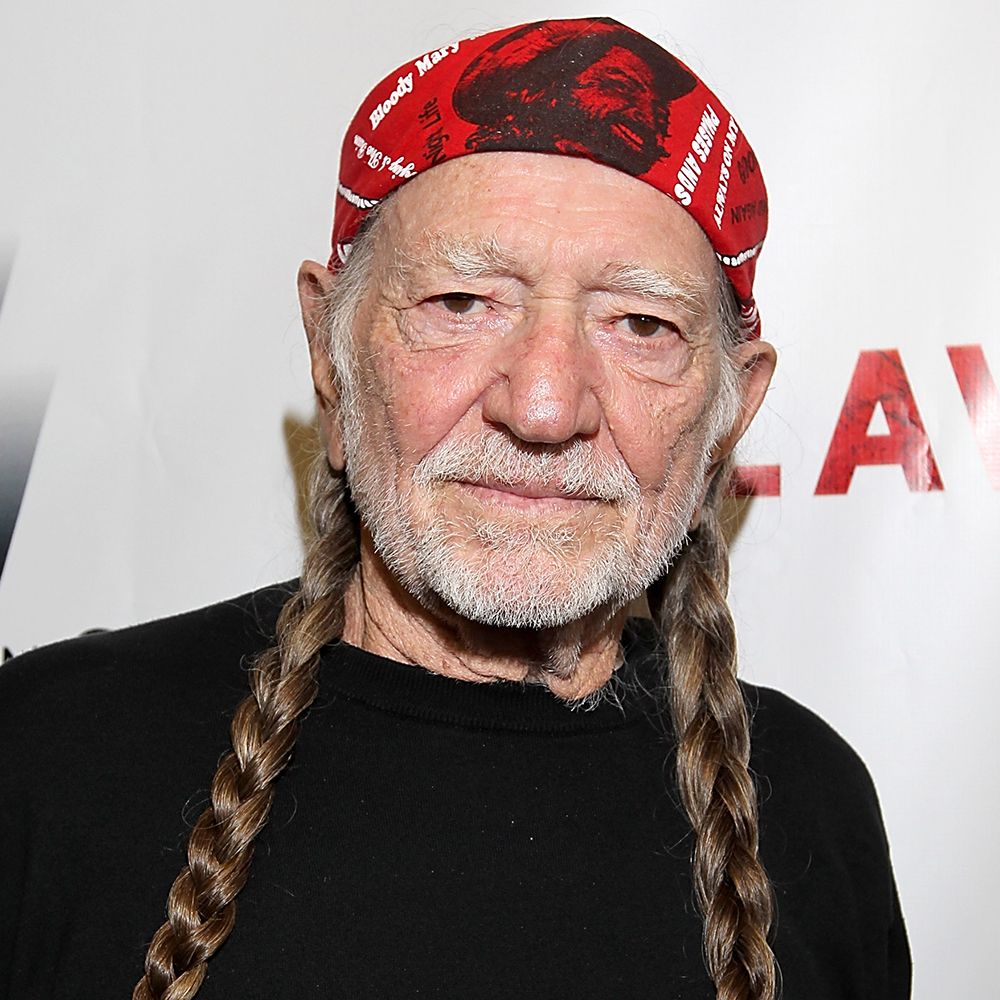
For decades, Willie Nelson’s braids were more than a hairstyle. They were part of his identity, as recognizable as his weathered voice, his battered guitar Trigger, and the outlaw country spirit that made him one of the most unforgettable figures in American music. Long before his hair turned silver, those red braids helped complete the image of a man who refused to fit neatly into Nashville’s polished expectations. Willie did not only sound different. He looked different, lived differently, and gave country music permission to loosen its collar.
That is why the story of him cutting those braids in 1983 still carries such emotional weight. It was not a publicity stunt. It was not a stage moment. It was not a carefully framed piece of celebrity theater. According to multiple reports, Willie cut off his trademark braids and gave them to his close friend Waylon Jennings during a party thrown by Johnny Cash and June Carter Cash to celebrate Waylon’s sobriety.

The setting alone feels like outlaw country mythology. Johnny Cash and June Carter Cash hosting a sobriety party. Waylon Jennings trying to step away from cocaine after years of life on the road. Willie Nelson marking the moment not with a speech, not with a plaque, and not with a grand declaration, but with something personal enough to shock almost anyone who understood what those braids meant to him.
For nearly 30 years, Willie’s hair had become part of the public language of his freedom. It represented rebellion, independence, and the refusal to let the industry decide what a country star should look like. Cutting it was no small gesture. It was Willie taking a piece of his own image, something fans around the world associated with him, and handing it to a friend as a sign of love, humor, loyalty, and support.
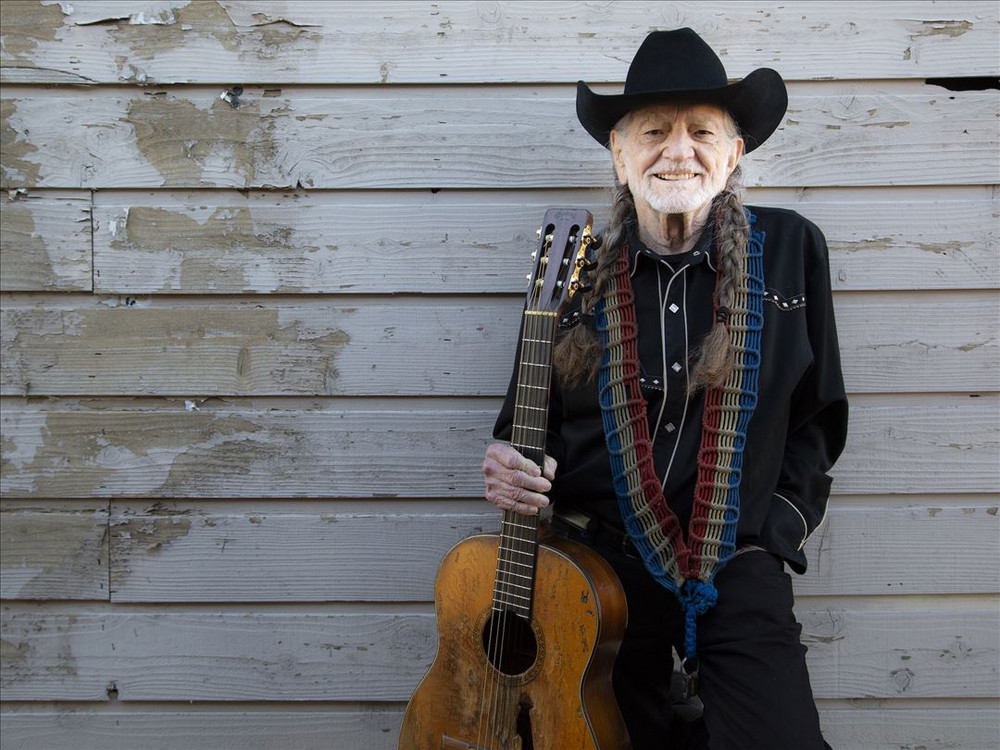
The story has been told in slightly different ways over the years. Auction materials and later reports described the braids as being presented to Jennings at the 1983 sobriety party, while Willie himself later told GQ that he cut them in Maui, gave them to his manager, and somehow they made their way back to Waylon. However the exact path unfolded, the meaning remained the same: the braids became a deeply personal artifact linking two men who helped redefine country music by living outside the rules.
Waylon Jennings died in 2002, but the braids remained part of his estate. In 2014, they became one of the most talked-about items in an auction of Waylon’s memorabilia, eventually selling for 37,000 USD. To some people, that number may have sounded absurd for hair. But to country music fans, those braids were never just hair. They were a physical trace of a friendship, a movement, and a moment when one outlaw honored another’s fight to survive.
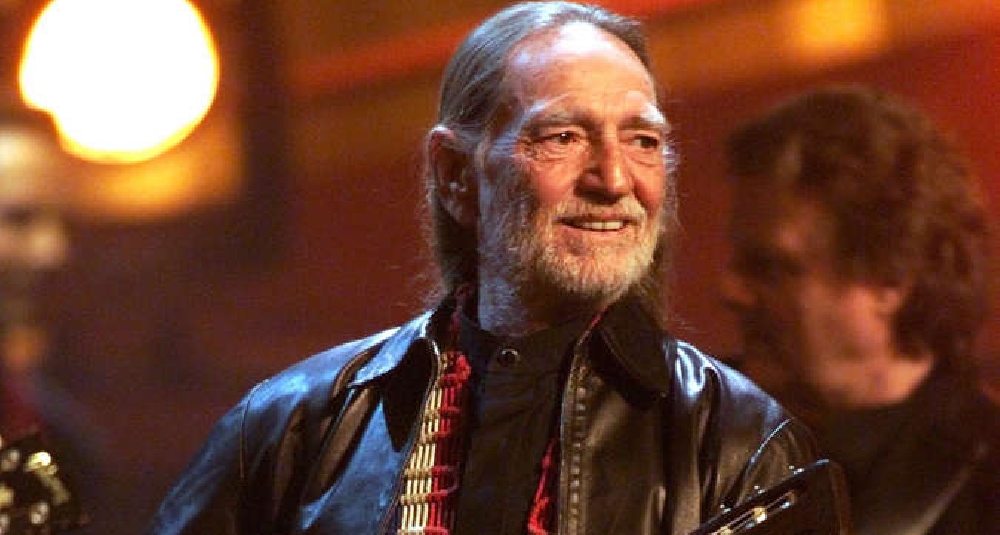
What makes the story so moving is that it captures Willie Nelson’s strange and beautiful way of showing care. He has always had a gift for turning the unexpected into something meaningful. A song becomes a prayer. A joke becomes wisdom. A pair of braids becomes a message to a friend: I see what you are fighting, and I am standing with you.
That is why people still talk about them. The braids carry the spirit of a time when country music was changing, when artists like Willie and Waylon pushed against clean-cut rules and built a rougher, freer sound. They also carry something more private: the knowledge that behind the legend, the tours, the records, and the myth, there were real friendships tested by addiction, fame, road life, and survival.
Almost everyone knows Willie Nelson’s braids as part of his image. Far fewer know why one set of them became a piece of country music history.
They were not cut because Willie wanted attention.
They were cut because a friend had made it through something hard, and Willie wanted to give him something no one else could.