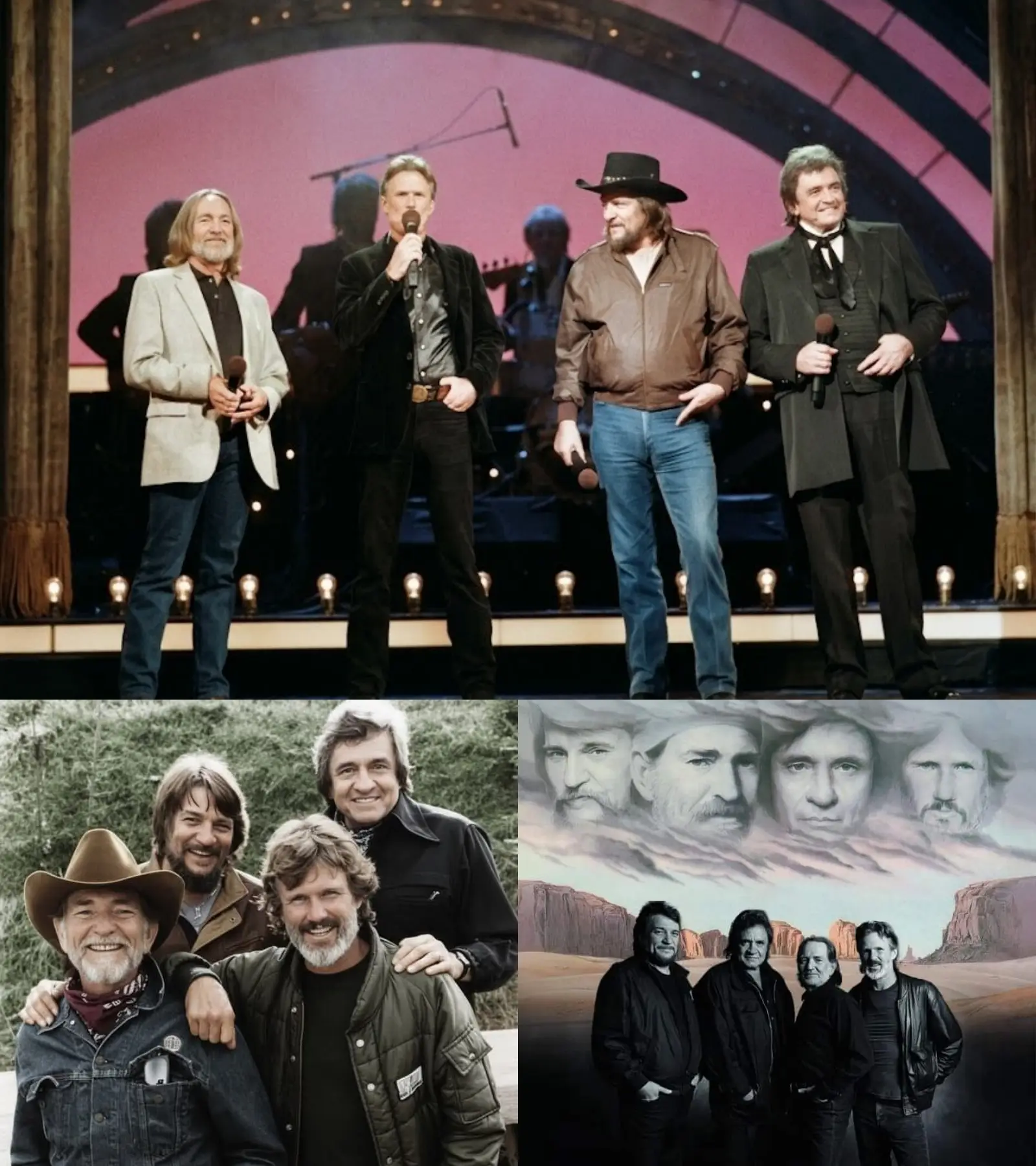
Did you miss the moment four legends stood on one stage and turned “Desperados Waiting for a Train” into something far bigger than a song? For country music fans, that performance still feels like one of those rare moments when the room understands it is not simply watching famous men sing together. It is watching history breathe.

Johnny Cash, Waylon Jennings, Willie Nelson, and Kris Kristofferson were already legends on their own before they became The Highwaymen. Each man carried a different kind of weight. Cash carried darkness, faith, prison songs, redemption, and a voice that sounded like the earth itself had learned to speak. Waylon carried rebellion, dust, danger, and the stubborn spirit of a man who refused to let Nashville smooth the edges off his truth. Willie carried road-worn tenderness, strange wisdom, and a voice that could make heartbreak sound peaceful. Kris carried poetry, regret, intellect, and the sadness of a man who knew how to turn broken lives into unforgettable lines.
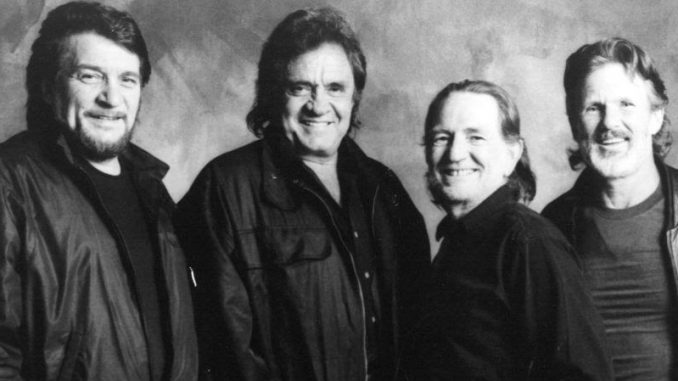
Together, they were more than a supergroup. They were a gathering of American myths, four men whose songs had already shaped the sound of outlaw country and whose faces seemed carved from decades of hard roads, mistakes, survival, and memory. When they stood together to sing “Desperados Waiting for a Train,” the song did not feel borrowed. It felt as if it had been waiting for them.
The song itself came from the pen of Guy Clark, one of Texas songwriting’s most respected voices. Clark wrote it about an older man who had been like a grandfather figure to him, turning childhood memory into a story about admiration, aging, friendship, and the painful moment when a hero begins to fade. Jerry Jeff Walker first recorded it in 1973, and Clark later included it on his 1975 album Old No. 1, helping make it one of his signature songs. When The Highwaymen released their version in 1985, the song entered a different kind of emotional territory because of who was singing it.
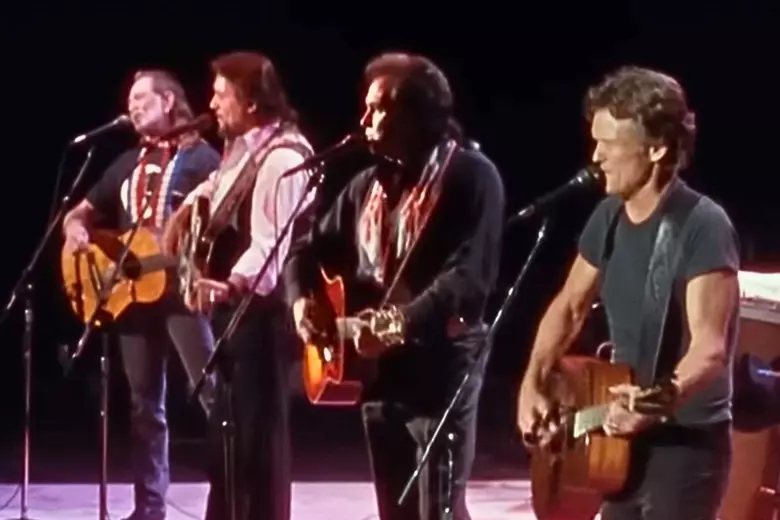
In their hands, “Desperados Waiting for a Train” became more than a story about an old drifter and a young boy. It became a meditation on time. It became a song about friendship, mortality, memory, and the quiet truth that every outlaw, no matter how strong, eventually sees the sun going down ahead of him. The words were still Guy Clark’s, but the faces delivering them made the meaning feel heavier.
Cash sounded like the past. His voice carried judgment and mercy at the same time, making every line feel like something remembered from a black-and-white photograph. Waylon carried the dust of the road, singing with the rough authority of someone who had lived close enough to rebellion to know its cost. Willie brought the ache of memory, bending his phrasing around the song like a man who understood that love and loss often ride together. Kris sang like a poet saying goodbye, not dramatically, but with the exhausted beauty of someone who had spent a life noticing what others missed.

That is why the performance still moves people. They were not just singing about an aging desperado. In some strange and beautiful way, they were singing about themselves. By the time fans watch the Nassau Coliseum performance from 1990, now remembered through American Outlaws: Live at Nassau Coliseum, it feels impossible not to see the layers of time around them. These were men who had lived hard, sung honestly, carried reputations larger than life, and still stood together with the warmth of brothers who understood one another without needing to explain.
The Highwaymen represented a spirit that country music may never see again in quite the same form. They were not polished into perfection. They were not built to chase trends. They were weathered, human, flawed, brilliant, and deeply believable. Their voices did not blend because they sounded alike. They blended because each voice carried a different part of the same road.
By the final lines of “Desperados Waiting for a Train,” the song feels less like entertainment and more like a farewell being sung in advance. It reminds listeners that heroes grow old, friendships become memories, and even the toughest men eventually face the silence at the end of the track.
Four legends.
One stage.
One Guy Clark classic turned into a mirror.
And one unforgettable reminder that outlaws do not really disappear. They keep riding through the songs.