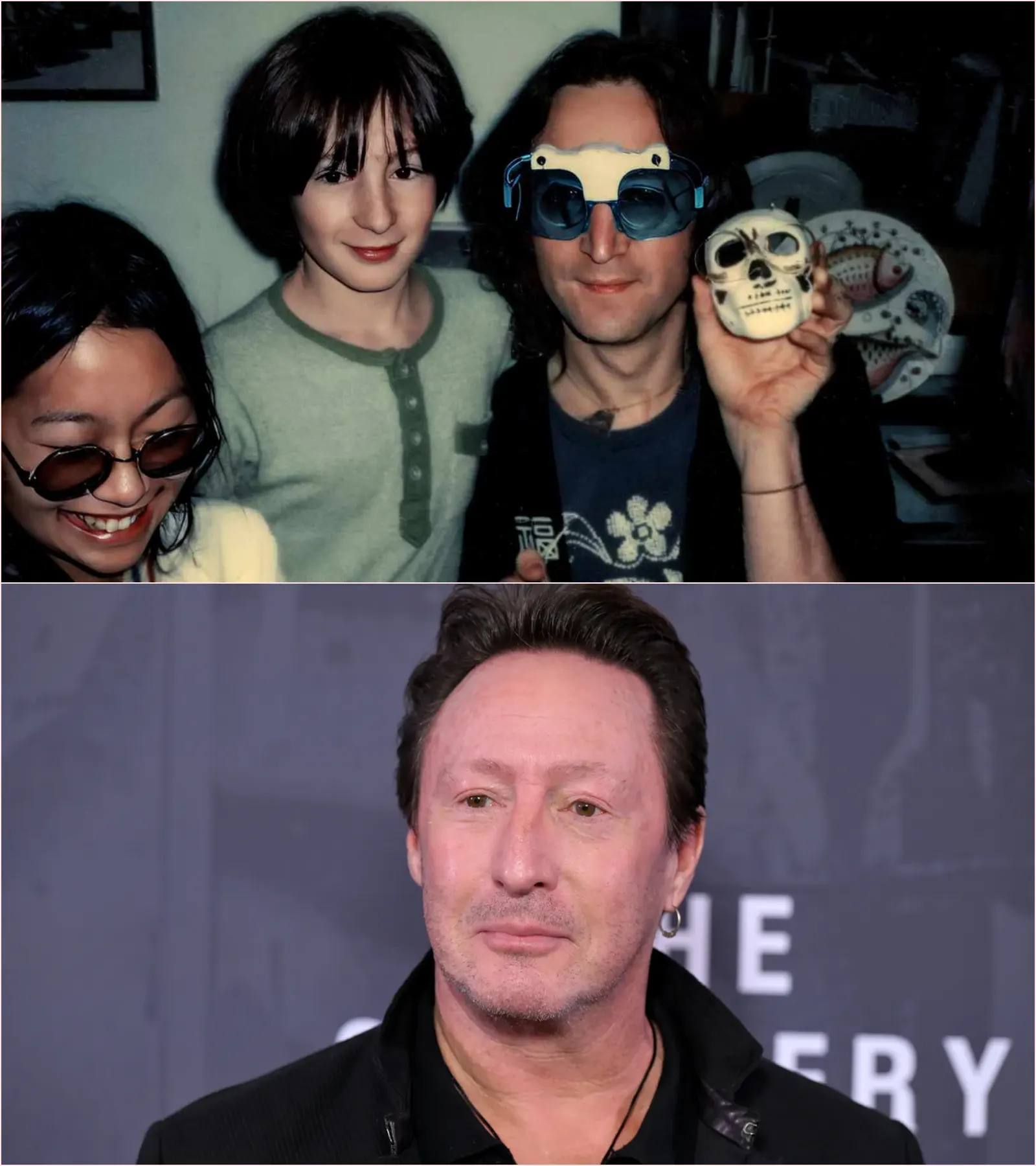
Julian Lennon did not merely lose his father when John Lennon was murdered in 1980. In the years that followed, he also found himself separated from many of the physical reminders connecting him to the complicated, often distant relationship they had shared. According to accounts Julian has discussed publicly, letters, clothing, handwritten notes, and other deeply personal pieces of family history eventually appeared in auction rooms, where sentimental value meant nothing unless he could outbid the collectors gathered around him.
For most people, a childhood letter belongs inside a family drawer or an old box protected from time. For Julian, correspondence associated with his father could become valuable Beatles memorabilia, assigned an estimate, placed beneath glass, and offered to whoever was willing to pay the highest price. Reports have said that he purchased letters and postcards exchanged with John after they entered the collectors’ market, using money from the settlement he reached with his father’s estate to recover belongings he felt should never have become strangers’ possessions.
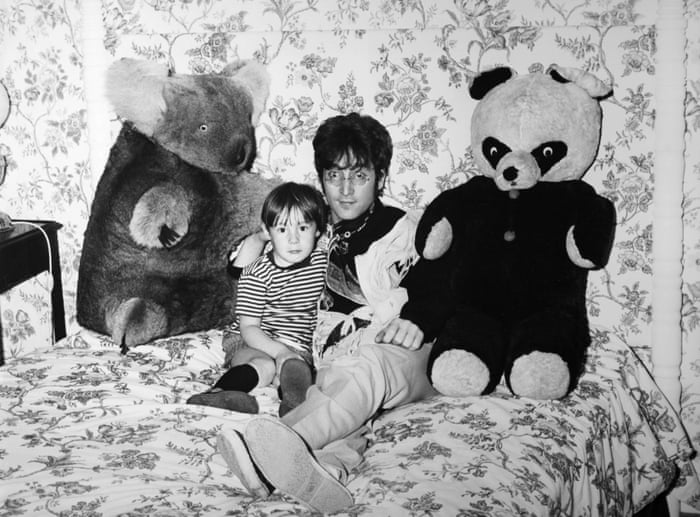
The situation carried a painful irony. To the world, John Lennon was a Beatle, cultural revolutionary, peace activist, and one of the most influential songwriters in history. To Julian, he was also the father who left the family home when his son was still very young. Julian was raised largely by his mother, Cynthia, and has said that he and she remained outside the Beatles’ inner circle after the marriage ended. Even decades later, he described himself as someone who often learned about new Beatles projects at the same time as the general public.
That distance made the surviving objects especially important. They were not merely souvenirs from a famous career. They offered evidence of private moments that existed before John belonged almost entirely to history. An old coat could recall the shape of a father seen through a child’s eyes. A postcard could preserve a few sentences written across distance. A letter might hold affection, awkwardness, or the fragile attempt to maintain a relationship that never had enough time to become simple.

Among the belongings Julian recovered was the colorful Afghan coat John wore during the Beatles’ Magical Mystery Tour period. Contemporary reporting said Julian paid approximately £30,000 for it. He also reportedly spent around £25,000 on Paul McCartney’s original recording notes for “Hey Jude,” the song Paul began as “Hey Jules” while driving to comfort Julian and Cynthia during the collapse of the Lennon marriage.
Julian’s collection also came to include a black cape once owned by John. In 2022, he offered digital versions of several pieces as non-fungible tokens while retaining the physical objects, describing the collection as part of the legacy he had spent years protecting. The sale again drew attention to the extraordinary reality that some of the items had reached him only after entering the commercial memorabilia world.

A quotation frequently attached to the story says Julian had been forced to purchase objects that were integral to his history with his father and that the experience was painful. The sentiment is consistent with his earlier interviews, although the exact viral wording is difficult to trace to a reliable original transcript. What is well documented is that collecting these objects was personal rather than speculative. His manager said at the time that Julian owned few belongings connected to John and was buying them as family heirlooms, not simply as investments.
The financial figures are startling, but they are not the most heartbreaking part of the story. Money could recover the coat, notes, photographs, and correspondence, yet it could not restore the years Julian and John never shared. It could not create the ordinary childhood mornings, conversations, arguments, and reconciliations that fame and family division had taken away.
Over time, Julian has spoken about choosing forgiveness rather than allowing anger to dominate the rest of his life. He has acknowledged depression and anxiety while crediting Cynthia’s grace and positivity with teaching him to keep moving forward. That choice does not erase the hurt. It simply prevents the hurt from owning every memory.
For Beatles collectors, John Lennon’s possessions may represent rare pieces of music history. For Julian, they represented something far more intimate: fragments of a father, a childhood, and a relationship he was still trying to understand. He was not bidding merely against other buyers. He was bidding against the transformation of his own memories into merchandise—and trying, one object at a time, to bring part of his family home.