Paul McCartney could not repair the pain left behind when John Lennon’s marriage to Cynthia collapsed, nor could he give Julian Lennon the ordinary childhood that fame, separation, and family turmoil had taken away. Yet one quiet gesture years later revealed that Paul had never completely forgotten the woman and child who had once belonged at the heart of the Beatles’ earliest story.
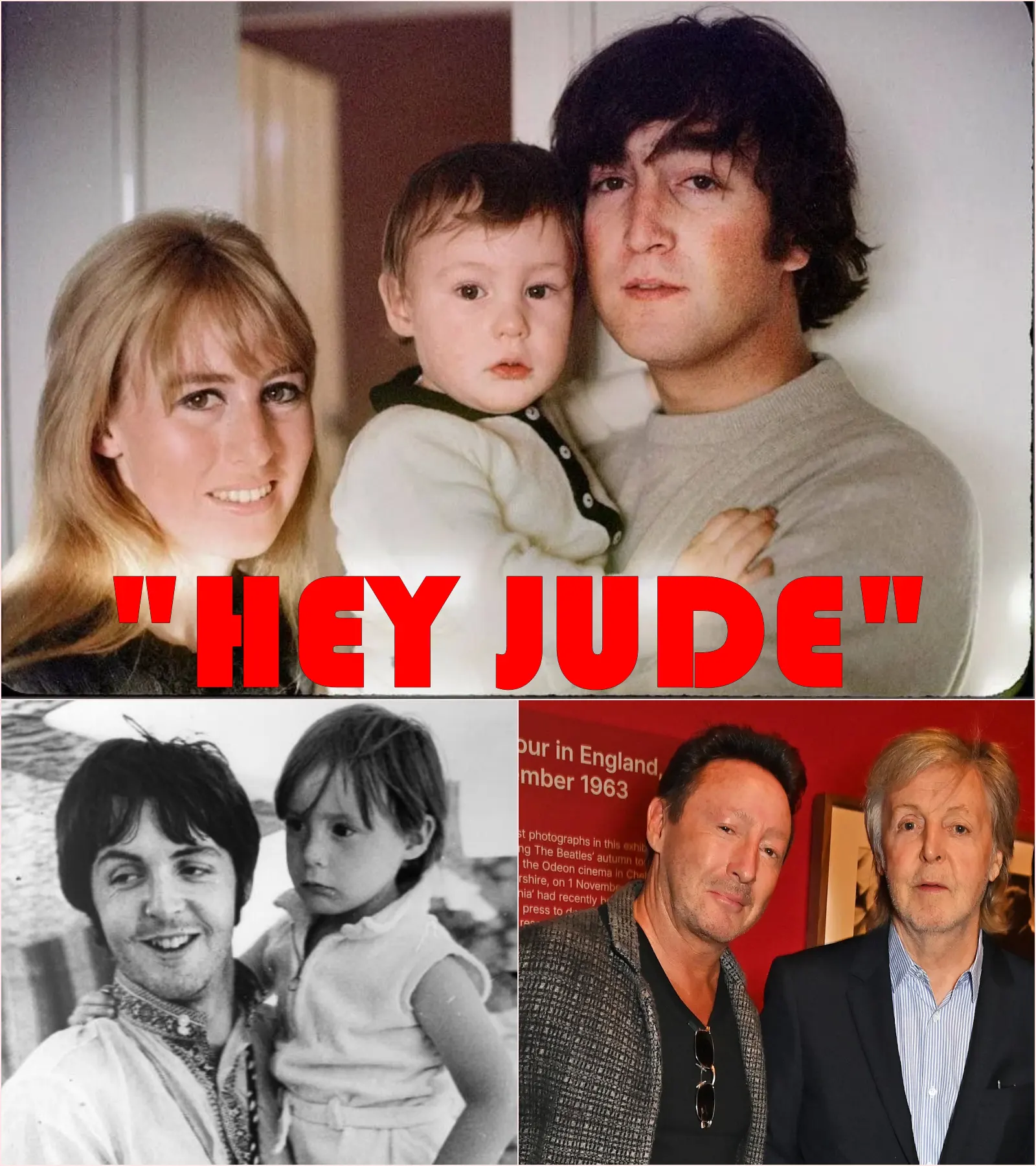
When John’s relationship with Yoko Ono brought his marriage to Cynthia toward its end in 1968, many people connected to the Beatles appeared to drift away from her. Cynthia had been present before worldwide fame, sharing the uncertain years when John, Paul, George Harrison, and their bandmates were still struggling young musicians. Suddenly, she and Julian seemed separated not only from John, but from the enormous world that had grown around him.
Paul refused to let that separation erase their friendship completely. He later recalled believing it was unfair that Cynthia and Julian should suddenly disappear from his life as though they had become outsiders. He drove to visit them at their home in Weybridge, hoping to offer comfort during a painful and confusing time. On that journey, he began forming a song originally addressed to “Jules,” the young Julian Lennon. That idea eventually became “Hey Jude,” one of the Beatles’ most enduring songs of reassurance.

The visit became famous because of the song it inspired, but Paul’s connection to Cynthia did not end on that driveway. Years later, after she had faced financial uncertainty and sold personal memorabilia connected to John, one of his old letters reportedly entered the collectors’ market. These were not merely pieces of Beatles history to Cynthia. They were fragments of a private relationship that had existed before John Lennon became a global symbol.
Cynthia openly acknowledged that financial pressures contributed to her decision to sell memorabilia. She explained that when bills had to be paid, pride could become a luxury, and objects carrying enormous emotional value could also become necessary sources of income. Among the items sold over the years were letters John had written to her during their relationship.
According to accounts later traced to Cynthia’s memoir, Paul purchased one of those letters. He did not buy the entire collection, as some exaggerated versions of the story have claimed. He bought a single letter, had it framed, and eventually sent it back to Cynthia as a gift. The precise letter has not been publicly identified with certainty, but the central gesture has been corroborated: Paul saw a private memory passing into the hands of a stranger and quietly helped return it to the woman for whom it had originally been written.
There were reportedly no cameras waiting to capture Cynthia’s reaction and no public campaign presenting Paul as the hero of the story. The act carried no expectation that she would praise him or that fans would ever hear about it. It appeared to come from something older and more personal—a loyalty formed during the years before the Beatles’ friendships became entangled with money, fame, business disputes, and loss.
For Cynthia, the framed letter could not restore her marriage or erase the difficult way it ended. It could not give Julian more years with his father or undo the loneliness both mother and son experienced. What Paul returned was smaller than a repaired family but more meaningful than an expensive collectible. He gave back a piece of Cynthia’s own life, reminding her that at least one person from that extraordinary past still recognized that the memory belonged to her.
The gesture also adds another emotional layer to Paul’s relationship with Julian. “Hey Jude” had begun as an attempt to comfort a child whose family was breaking apart. Decades later, Paul’s quiet decision to recover Cynthia’s letter reflected the same instinct: he could not remove the hurt, but he could refuse to look away from it.
Beatles history is often told through masterpieces, rivalries, recording sessions, and cultural revolutions. Yet sometimes its most revealing moments happened away from the studio, when no one was watching.
Paul McCartney could not change what John left behind. He could only choose how he responded—and by returning one framed letter, he showed Cynthia that her memories were never merely memorabilia. They were part of a life, a family, and a history that deserved to come home.