For more than six decades, Keith Richards has lived at the center of rock ’n’ roll history, creating guitar riffs that seemed to carry danger, freedom, survival, and mischief inside the same few chords. That is why reports of a new Netflix documentary titled Keith Richards: Riffs of a Lifetime have traveled so quickly, promising an intimate journey through the scars, friendships, family bonds, and musical instincts behind one of the most recognizable figures popular music has ever produced.

According to the circulating story, the first trailer moves from Keith’s early days in postwar London to his reunion with Mick Jagger at Dartford railway station, the formation of the Rolling Stones, and the decades of triumph and turmoil that followed. Rare photographs, private recordings, backstage footage, and conversations with family members and fellow musicians are said to reveal the man beneath the scarves, silver rings, weathered smile, and legendary guitar.
“He didn’t just play guitar,” a producer reportedly says in the trailer. “He gave rock ’n’ roll its heartbeat.”

It is a powerful line, but neither the documentary title nor the quotation has been confirmed by Netflix. As of August 4, 2026, a review of Netflix’s official title pages and media center found no announcement for Riffs of a Lifetime. The reported trailer and promised release later this year should therefore be treated as an unverified online claim rather than an established premiere.
The confusion may be connected to a genuine Netflix documentary already devoted to Keith. Keith Richards: Under the Influence, directed by Morgan Neville and released in 2015, remains listed on the platform. The film follows Keith as he explores the blues, country, Southern soul, and other sounds that shaped him while creating his solo album Crosseyed Heart. Netflix describes it as an intimate portrait using archival material, music, and reflective conversations to trace the origins of his sound.

Even without a newly confirmed documentary, the premise of Riffs of a Lifetime captures why Keith’s story remains irresistible. His playing was never about sterile perfection or filling every available space. He understood that rhythm could lean, stumble, pause, and still land exactly where it belonged. His greatest riffs sounded both ancient and immediate, as though they had been waiting inside the blues for someone reckless enough to uncover them.
Yet the most meaningful film about Keith would need to move beyond the familiar mythology. It would have to explore his complicated brotherhood with Mick Jagger, his loyalty to Charlie Watts, the musicians who inspired him, and the family life that endured behind decades of public chaos. It would also need to confront loss, addiction, aging, and the physical adjustments required for him to continue playing.
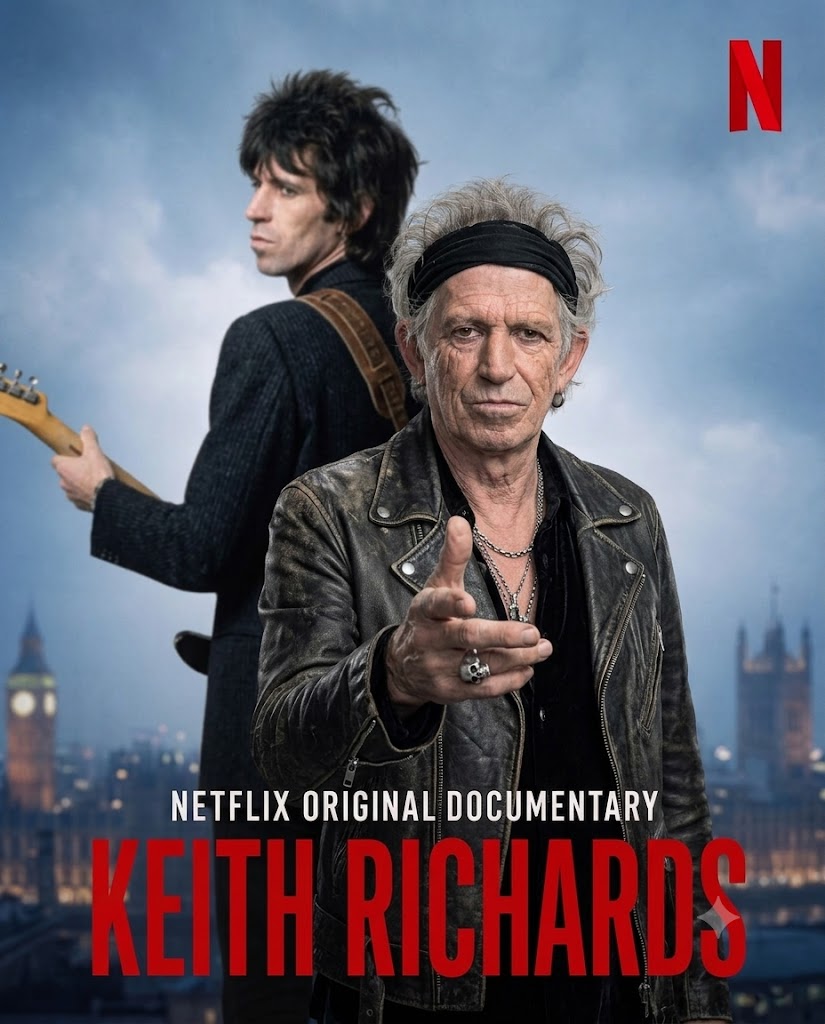
Recent reporting portrays Keith as creatively active at 82, adapting his technique as arthritis changes the movement of his hands. He has acknowledged that he is no longer as fast as he once was, but he continues finding different ways around those limitations. He has also suggested that the Rolling Stones still possess the energy to perform again, even though the band is not touring during 2026.
That is the documentary fans truly want—not a polished monument, but a portrait with every crack left visible. Keith’s importance has never come from pretending that he escaped damage. It comes from the fact that he carried it, laughed at it, learned from it, and somehow kept finding another chord.
Keith Richards: Riffs of a Lifetime may not yet exist as described, and no official trailer is currently available to watch. Still, the excitement surrounding the rumor reveals a genuine hunger to understand the man behind the immortal sound.
Keith Richards did more than help write unforgettable songs. He gave generations permission to be imperfect, weathered, loyal, rebellious, and still alive enough to begin again. Whenever the definitive portrait is finally made, it will not merely document a guitarist’s career. It will tell the story of how a few loose chords became the pulse of rock ’n’ roll—and how the man who played them somehow kept that heartbeat going.