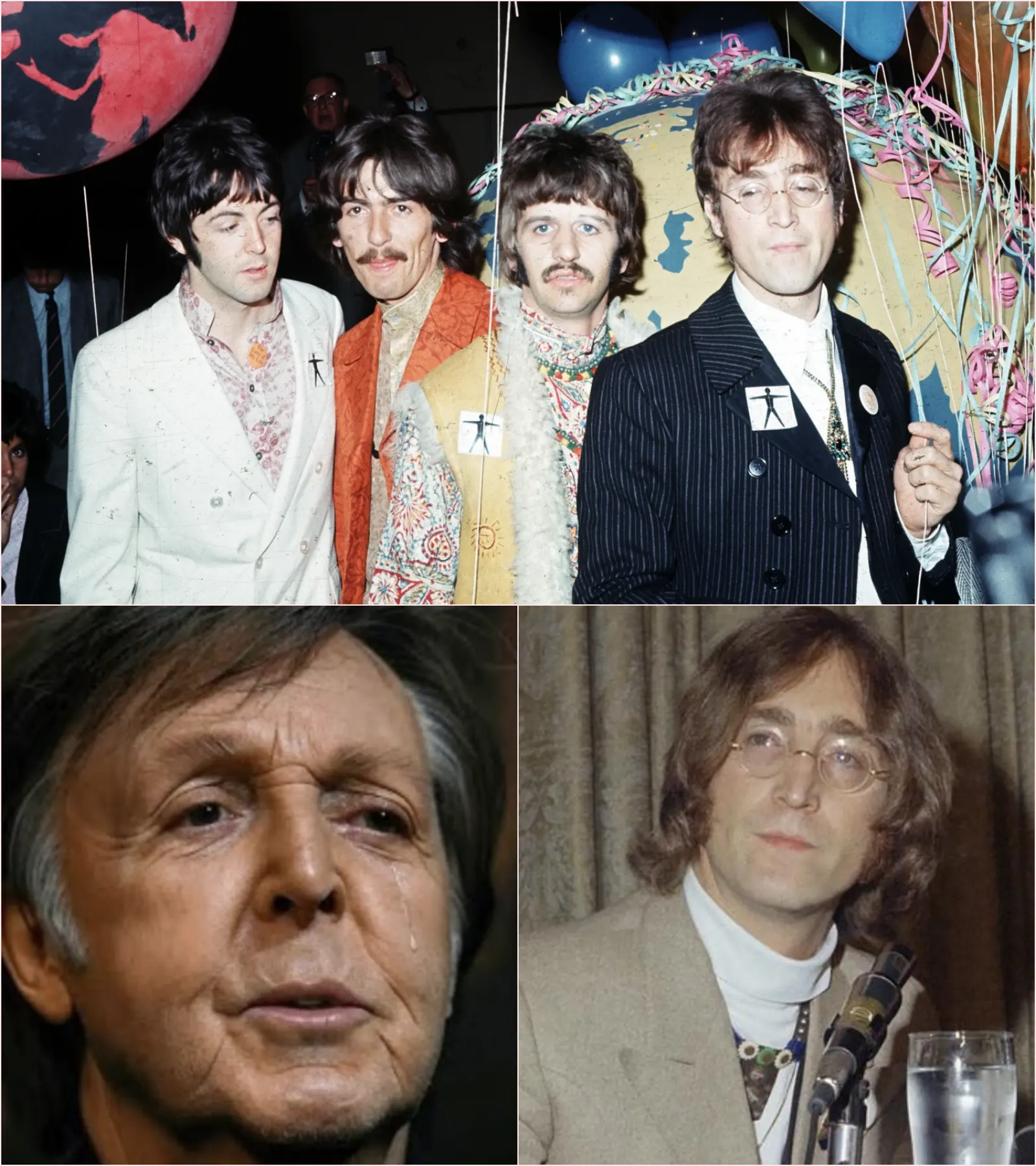
For generations, the breakup of The Beatles has often been remembered as though the ending was already inevitable by the time “Abbey Road” was completed. But a remarkable recording from one of the band’s final business meetings tells a far more complicated story. In September 1969, John Lennon, Paul McCartney, and George Harrison gathered at Apple’s headquarters in Savile Row while Ringo Starr was absent because of health issues. Instead of simply discussing how to close the book on The Beatles, they talked about something far more haunting in hindsight: another album.

Beatles historian Mark Lewisohn later drew attention to the tape, describing it as evidence that the group had not yet collectively decided that “Abbey Road” would be their final studio statement. The recording captures Lennon actively discussing what a future Beatles album might look like, challenging the familiar image of John as the man who had already mentally abandoned the group. According to the tape, he was not merely complaining about the past. He was proposing a new structure designed to ease one of the tensions that had increasingly divided them: songwriting space.

Lennon’s idea was surprisingly democratic. He suggested that future albums contain four songs each from himself, McCartney, and Harrison, with two additional spots available for Ringo if he wanted them. Lennon also proposed that the old idea of Lennon and McCartney functioning as one songwriting unit should finally be acknowledged as outdated, giving each writer clearer individual ownership and allowing George the equal creative space his rapidly developing songwriting increasingly demanded.
On paper, it sounded almost like a solution.

George had spent years fighting to have more of his material taken seriously, and by 1969 he was bringing songs of extraordinary quality into the studio. John apparently recognized that reality. Paul, however, was far less convinced by the proposed balance. During the discussion, he acknowledged that George’s newest material had reached the level of Lennon and McCartney’s, while also suggesting that Harrison’s earlier songs had not always been as strong. George pushed back, pointing out that listeners had appreciated his work for years. The conversation quickly exposed old wounds beneath what was supposed to be planning for the future.
The disagreement was about more than track numbers. It reflected years of creative competition, frustration, and changing identities. The Beatles were no longer four young men who could easily fit every ambition onto one record. John was increasingly involved with Yoko Ono and the Plastic Ono Band. George had accumulated songs that needed room. Paul remained intensely committed to keeping The Beatles productive, but his determination could sometimes feel controlling to the others. Ringo, meanwhile, had already temporarily walked away during the “White Album” sessions before returning.

What makes the tape so heartbreaking is how close possibility and collapse were sitting beside each other.
These were not men announcing that The Beatles were finished. They were arguing about how the next Beatles record should work.
Yet less than two weeks later, everything changed. After performing with the Plastic Ono Band at the Toronto Rock and Roll Revival, Lennon privately told the others that he wanted to leave the group. At a September 20 meeting, he reportedly described his decision in terms of wanting a “divorce.” The breakup was not immediately announced publicly, but the path toward separation had become dramatically harder to reverse.
That timing gives the earlier conversation an almost unbearable quality. John Lennon had been sitting at a table discussing Christmas singles, songwriting equality, and the structure of another Beatles album. Days later, he was preparing to step away from the band entirely.
Perhaps no single plan could have saved The Beatles. Their problems extended beyond songwriting into business disputes, management disagreements, exhausted friendships, and four increasingly independent creative lives. Still, the recording proves that the ending was not as simple as four men silently agreeing it was over.
For one brief moment in September 1969, there was still a doorway.
John Lennon was trying to imagine what The Beatles might become next.
History remembers that they never walked through it.