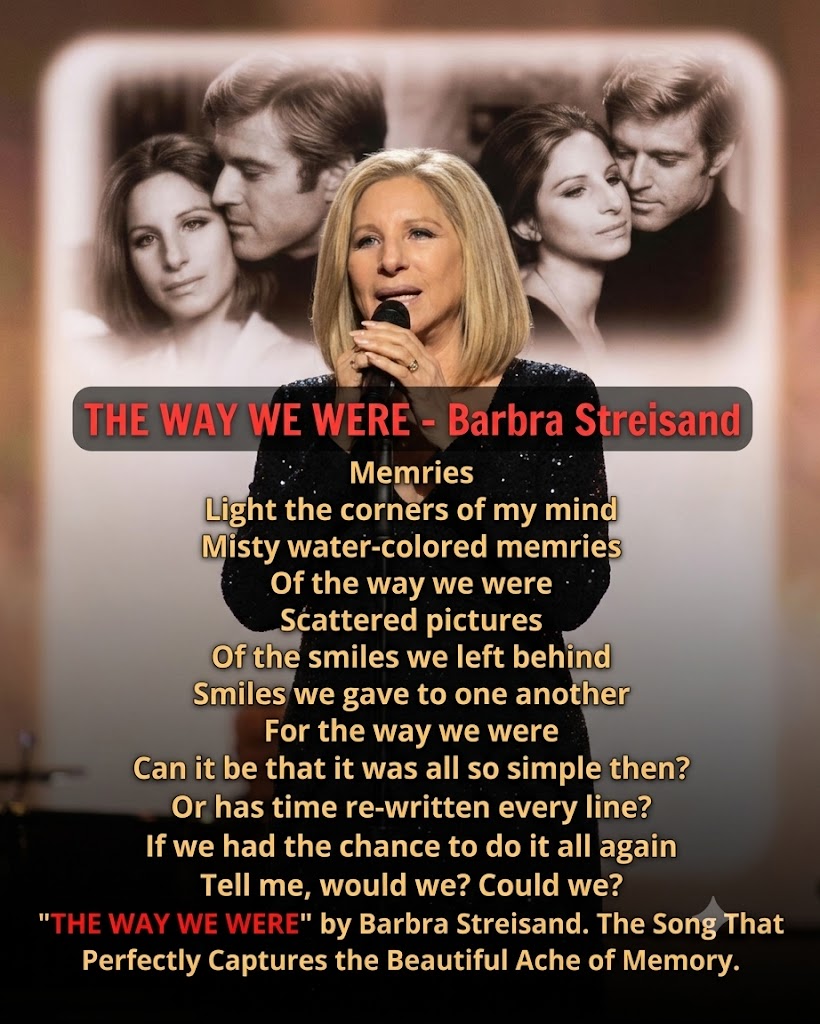
There are songs that become famous, and then there are songs that somehow grow older alongside the people who first loved them. “The Way We Were” belongs to that rare second category. When Barbra Streisand first recorded it more than five decades ago, the song was already filled with memory, longing and the bittersweet realization that love can remain beautiful even after the life surrounding it has changed. But hearing Streisand return to those words many years later creates an entirely different experience. The melody is the same. The memories it awakens are not. And the woman singing it now carries a lifetime that the young Barbra who first recorded it could not possibly have imagined.
When “The Way We Were” arrived in the early 1970s, Streisand was already a major star, but so much of her story was still ahead of her. The song became inseparable from the 1973 film of the same name, in which she starred opposite Robert Redford, and its emotional power quickly moved beyond the movie. People heard their own relationships inside it — first loves, old photographs, friendships that disappeared, marriages that changed and moments that could never be recreated exactly as they once were.
That was always the genius of the song. It did not ask listeners to believe that the past was perfect. It simply understood why people still miss it.
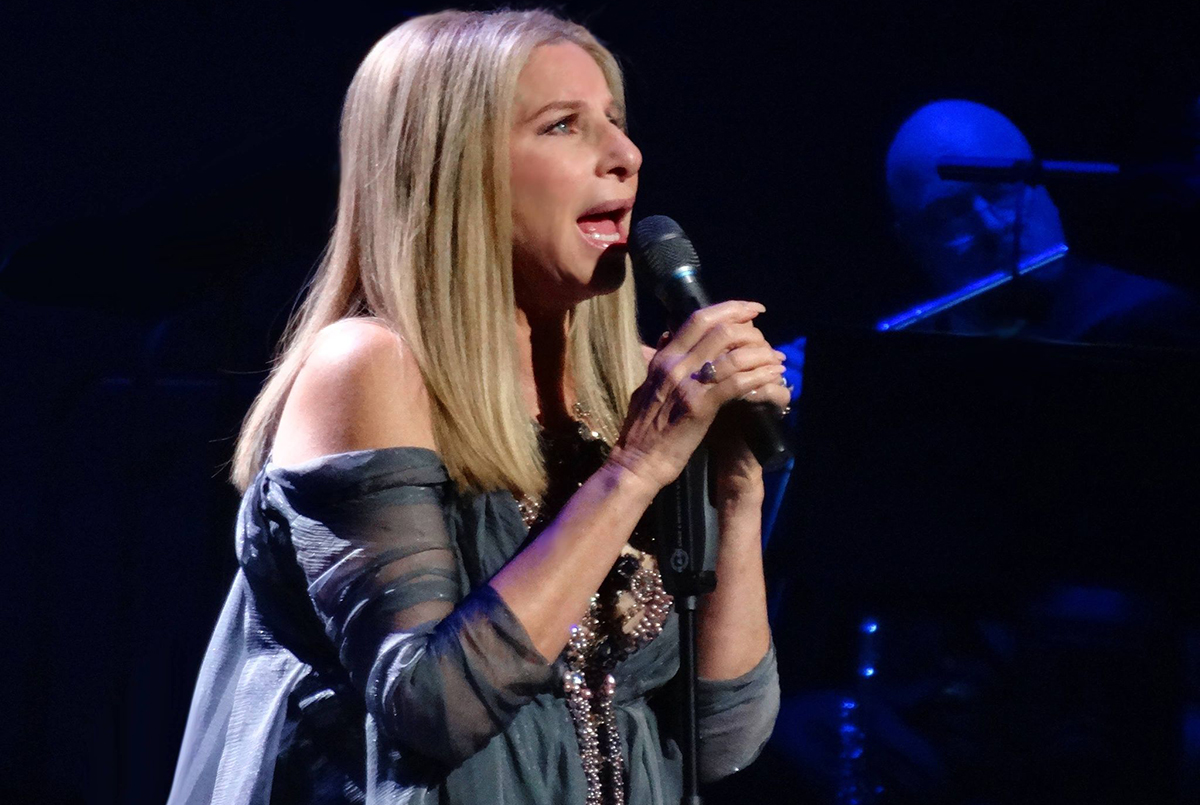
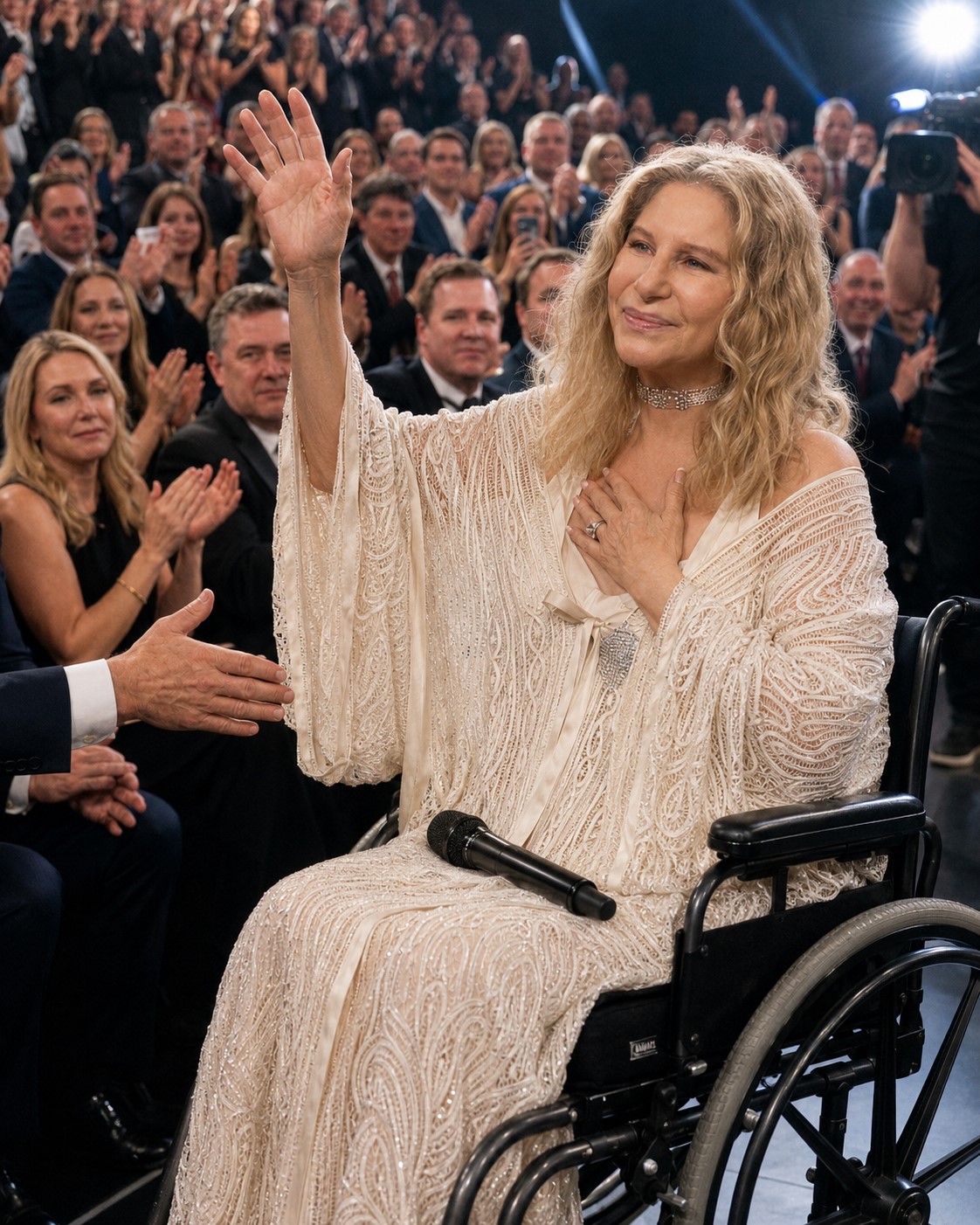
Decades later, when Barbra sings “The Way We Were,” that idea carries far more weight. Her voice has traveled through generations of music, films, enormous stages and private chapters the public could only partially see. She has known extraordinary professional triumphs, relationships that changed, friendships that endured and people she loved who are no longer here. She has watched her son grow into adulthood, built a lasting marriage with James Brolin and seen audiences who first discovered her as young adults return with children and grandchildren of their own.
All of that history seems to enter the song now.
The younger Streisand could sing about memory with extraordinary emotional intelligence. The older Streisand sings from inside the very thing the song describes. When she reaches for a familiar phrase, the listener is no longer hearing only a character looking backward. They are hearing an artist who has lived long enough to understand how quickly decades can become photographs.

That does not make the performance sad in a simple way. If anything, there is gratitude inside it. The past may be unreachable, but it existed. The people mattered. The laughter happened. The love was real.
Perhaps that is why the song has never required dramatic staging. “The Way We Were” works best when almost everything else disappears. A piano, an orchestra, a familiar introduction and Streisand’s voice are enough because listeners bring the rest with them. Someone remembers a parent. Someone thinks about a husband or wife from another chapter. Someone remembers being young enough to believe time moved slowly.
Then Barbra begins singing, and suddenly everyone is looking backward together.

The passage of time has also changed the meaning of her voice. It may not sound exactly as it did on the original recording, nor should anyone expect it to. A voice that has lived for decades carries different textures, and sometimes those changes make a song about memory even more truthful. Perfection becomes less important than presence. A breath, a pause or a slightly weathered note can contain more emotion because the audience understands the distance traveled to reach it.
Few singers have had the unusual experience of performing the same song across so much of a lifetime. Fewer still have a song whose subject seems to deepen naturally as both performer and audience grow older.
“The Way We Were” began as a meditation on memories and the strange tenderness with which people preserve them. More than fifty years later, it has become something larger. It is connected to Barbra’s own history, to the lives of millions who grew up with her music and to the universal realization that one day even ordinary moments become precious simply because they are gone.
When Streisand sings it now, the song no longer feels like someone asking us to remember the past.
It feels like a lifetime itself turning around for one final look — not with regret, but with gratitude for having had something beautiful enough to remember.