The story has all the ingredients of an unforgettable act of kindness: a desperate family, a seriously ill baby, a request for signed memorabilia, and a superstar who supposedly decided that an autograph was not enough. According to the version now being attached to Barbra Streisand, the family of baby Erik Ortiz Cruz reached out in 2014 hoping she might donate signed items they could auction to help pay for an $83,000 operation. The child was reportedly suffering from cortical dysplasia, a neurological condition causing as many as 30 seizures a day. The emotional twist is that Streisand allegedly offered to cover the entire surgery herself while still sending the memorabilia as gifts.
It is a beautiful story, but the documented reporting from 2014 identifies a different celebrity as the person who stepped forward: Cristiano Ronaldo. Contemporary reports said Erik’s family and supporters initially sought signed football boots and a shirt from the Real Madrid star so they could raise money for treatment. Instead, Ronaldo reportedly offered to pay the full cost of the surgery, estimated at about €60,000, while also providing signed items to support the family’s fundraising efforts. Some English-language coverage translated the amount to roughly $83,000.
That distinction matters, especially because the real story is powerful enough without changing the name attached to it. Erik was only about ten months old at the time, and reports described a frightening medical reality in which cortical dysplasia was triggering repeated epileptic seizures throughout the day. His family had already been trying to raise money through local campaigns in Spain when the appeal eventually reached Ronaldo. What began as a modest request for auctionable memorabilia reportedly became something much larger when he chose to help with the medical bill itself.

The confusion may feel understandable because Barbra Streisand has a genuine record of major philanthropy, particularly in health care. In 2008, the Streisand Foundation gave a $5 million endowment to Cedars-Sinai to establish the Barbra Streisand Women’s Cardiovascular Research and Education Program, part of what became the Barbra Streisand Women’s Heart Center. Her support has focused heavily on improving research, awareness, and treatment for women’s heart disease, an area she has repeatedly described as deserving far more attention.
That real history helps explain why a story about Streisand quietly paying for a stranger’s medical care can sound instantly believable. Her public legacy has never been limited to records, films, awards, or sold-out stages. Through the Streisand Foundation, she has supported a wide range of causes, while her work with Cedars-Sinai has helped bring attention to gender disparities in cardiovascular research and treatment.

But kindness deserves accuracy too. When a compassionate act becomes part of someone’s legacy, the person who actually performed it should not disappear from the story. In this case, the evidence from 2014 points to Cristiano Ronaldo as the athlete who was asked for signed memorabilia and then reportedly went far beyond that request by helping cover Erik Ortiz Cruz’s surgery.
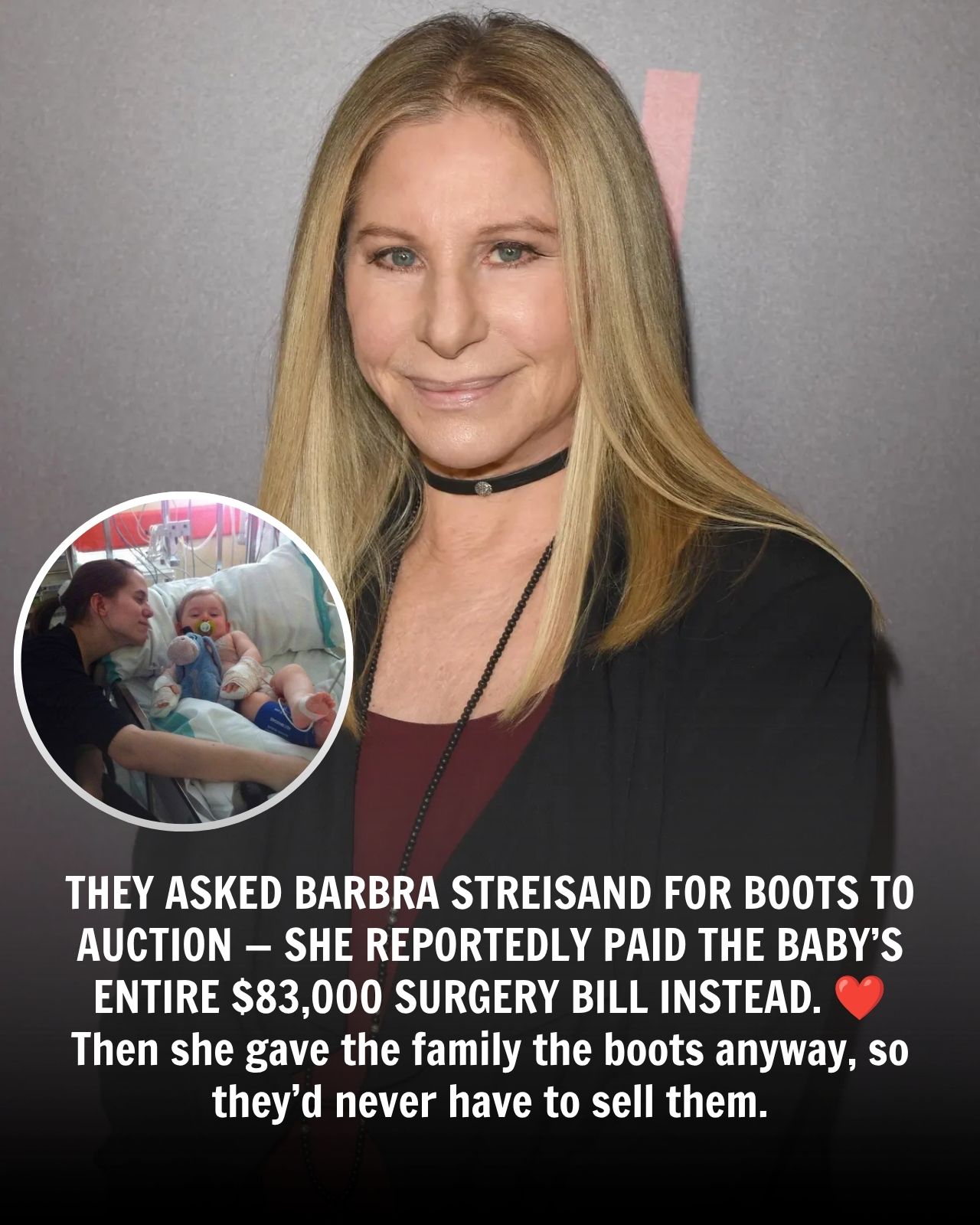
The deeper message, however, survives the correction. A family asked for something small because they were trying to save a child, and someone with extraordinary resources reportedly decided to do much more. That is the part worth remembering: not celebrity mythology, not a name added later, but the moment when fame became useful to someone frightened, exhausted, and running out of options.
Sometimes generosity does not need a spotlight. It only needs to reach the right person at the moment they need it most. And perhaps that is why stories like Erik’s continue to resonate years later: beneath the celebrity names and headlines is something universal — the hope that when a family is overwhelmed, someone will see their pain and choose to help.