More than half a century after the Beatles fell apart, Paul McCartney can still speak about those final years with a mixture of affection, frustration, sadness, and disbelief. Time may have softened some of the anger, but it has never erased what the breakup cost him emotionally. For Paul, the end of the Beatles was not simply the closing of a successful band. It was the collapse of a partnership that had defined his youth, his creativity, his friendships, and almost every part of the life he had known since he was a teenager in Liverpool.

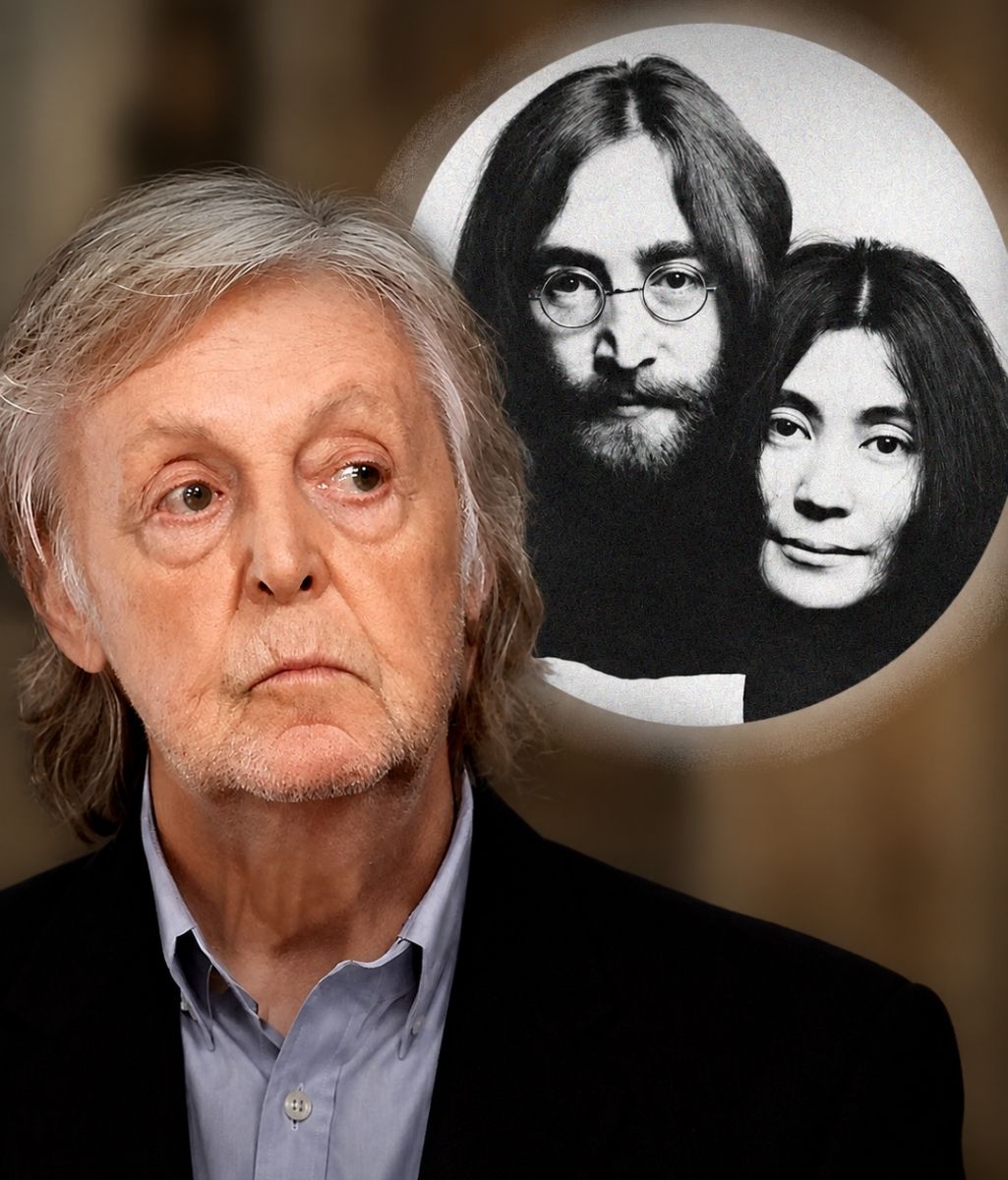
At the center of many public conversations about that painful period has always been Yoko Ono, John Lennon’s wife and creative partner. For decades, fans argued over how much influence she had on the Beatles’ breakup, often reducing an extraordinarily complicated story to one person. McCartney himself has offered a more nuanced picture over the years. He has admitted that Yoko’s constant presence in the studio was difficult for the band to adjust to, especially because the Beatles had previously worked inside a private world built around four musicians who understood one another’s habits almost instinctively. Her presence changed that dynamic, and Paul did not pretend it was always comfortable.
But he has also repeatedly made clear that blaming Yoko alone is far too simple. John wanted her there. More importantly, by the late 1960s, the Beatles were already under enormous pressure from business disputes, personal changes, creative disagreements, exhaustion, and the simple fact that four young men who had grown up together were becoming very different adults. Their manager Brian Epstein had died in 1967, leaving a vacuum that intensified arguments over who should guide the band’s future. Paul favored one direction for management, while John, George Harrison, and Ringo Starr supported another. That disagreement became one of the deepest wounds in the group.
For McCartney, the legal battles that followed were especially painful. He eventually took the extraordinary step of suing the other Beatles in order to dissolve their business partnership, a decision that made him look, at the time, like the man breaking up the group he desperately wanted to preserve. Years later, he explained that the lawsuit was actually intended to protect the Beatles’ financial interests and secure control of their work. Yet knowing the reason did not make the emotional experience any easier. Paul lost not only a band but, for a time, friendships that had felt almost like family.

His relationship with John became especially complicated. There were cutting songs, public remarks, private hurt, and years when both men seemed to carry resentment alongside deep affection. That is why Paul’s later reflections have often sounded less like anger and more like grief. He has spoken about how much he loved John, even when they were fighting, and how grateful he remains that they repaired some of their relationship before Lennon’s death in 1980.
Yoko’s role in that history still carries emotion because she represented, to Paul, the moment John’s life began moving in a direction the rest of the Beatles could no longer follow. Yet McCartney has also shown respect for the relationship John chose and for the artistic partnership the couple built together. The tension, in other words, was real, but so was the complexity.
Perhaps that is what makes the story so powerful decades later. The Beatles were not destroyed by one argument, one woman, one lawsuit, or one moment. They were pulled apart by love, ambition, exhaustion, business, changing identities, and the painful reality that even the closest bonds can become impossible to maintain forever.
For Paul McCartney, the breakup became a wound he learned to live with rather than something he ever completely forgot. He went on to build another extraordinary career, create new music, raise a family, and eventually share stages again with Ringo. But when he speaks about those final Beatles years, the emotion remains unmistakable.
Because beneath all the history, money, mythology, and fame was something painfully human: four young friends who changed the world together, then discovered they could no longer remain the people they had once been.