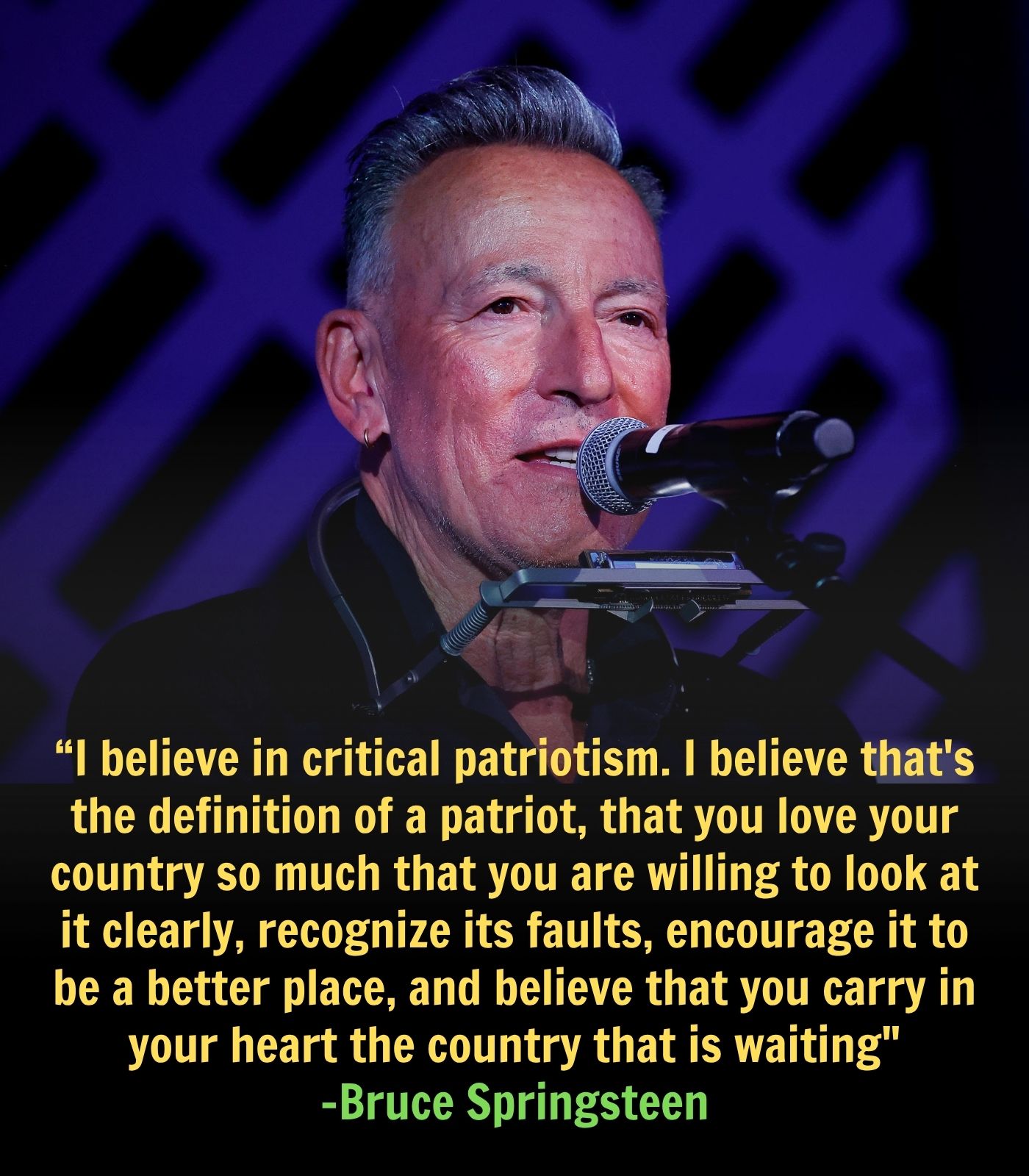
Bruce Springsteen has spent a lifetime singing about people trying to find their place in America. In the interview with Geoff Bennett described in the PBS News special Bruce Springsteen: Finding America in Song, he put a name to the conviction running through so much of that work: “critical patriotism.” The phrase carries both affection and responsibility. For the musician known as The Boss, loving a country means caring enough to see it clearly—and remaining invested in what it could become.

His explanation brings that belief into focus: “You love your country so much that you are willing to look at it clearly, recognize its faults, encourage it to be a better place.” There is hope within those words, even as they acknowledge disappointment. Springsteen describes a relationship that requires attention, honesty, and continued effort. The attachment remains strong enough to withstand difficult questions because its foundation is a belief that improvement is possible and worth pursuing.
That perspective feels closely connected to his storytelling. Across decades of songs, Springsteen has returned to workers, families, restless young people, and communities struggling to hold onto a future. Their experiences give large ideas an intimate scale. Economic hardship becomes a household wondering how to get through another month. Freedom becomes the possibility of choosing a different life. Belonging becomes the hope that the place someone calls home will make room for them.

This attention to individual lives helps explain the emotional force of his comments. A country can be discussed through symbols, institutions, and historical achievements, but people experience it through daily circumstances. They encounter its promises at work, at school, around the dinner table, and in the opportunities available to their children. Springsteen’s idea of patriotism asks listeners to keep those experiences in view. Caring about the nation includes caring about how life feels for the people living within it.

There is also something deeply personal about his willingness to hold affection and frustration together. Anyone who has loved a hometown knows how pride can coexist with concern. Familiar streets can carry treasured memories while revealing changes that are difficult to accept. The desire to protect what matters may also create a desire to repair what causes harm. Springsteen’s words give that complicated attachment a language, allowing love of place to include an honest account of its struggles.
His use of the word “encourage” is particularly meaningful. It suggests an ongoing relationship with the country, one sustained through participation rather than a single declaration. Encouragement requires some faith in the possibility of a response. Within his explanation, recognizing faults leads toward the question of what could be done better. That movement gives the message its emotional direction: the purpose of looking closely is to remain engaged with a future that has yet to be written.

For listeners who have carried his music through their own lives, the interview offers a way to understand the connection between his songs’ hardship and their endurance. Difficult circumstances often sit beside a stubborn desire to continue, to reach someone, or to imagine another chance. Hope gains weight because the struggle has been acknowledged. His comments about patriotism follow that same emotional path, making room for uncomfortable realities while preserving a reason to care about what comes next.
Ultimately, Springsteen’s message rests on a demanding kind of love. It asks for clear eyes, patience, and the willingness to stay involved when admiration becomes complicated. After decades of turning American lives into songs, he is describing a responsibility that extends beyond the stage: to notice, to question, and to keep believing that people deserve something better. The lasting power of his words comes from that commitment—a conviction that the country we carry in our hearts can help guide the work of improving the one we share.