▶ Watch the full video at the end of the article.
Tom Jones was sitting in the chair where he usually listens for someone else’s life-changing moment. Then a familiar face appeared on a screen, and the attention shifted toward him. According to the account of the surprise, Stevie Wonder arrived with a harmonica and a musical greeting built around “It’s Not Unusual,” the song that helped introduce Jones to the world in 1965. As the melody unfolded, the Welsh singer reportedly became visibly emotional, receiving an expression of affection from someone whose voice belonged to his musical history.
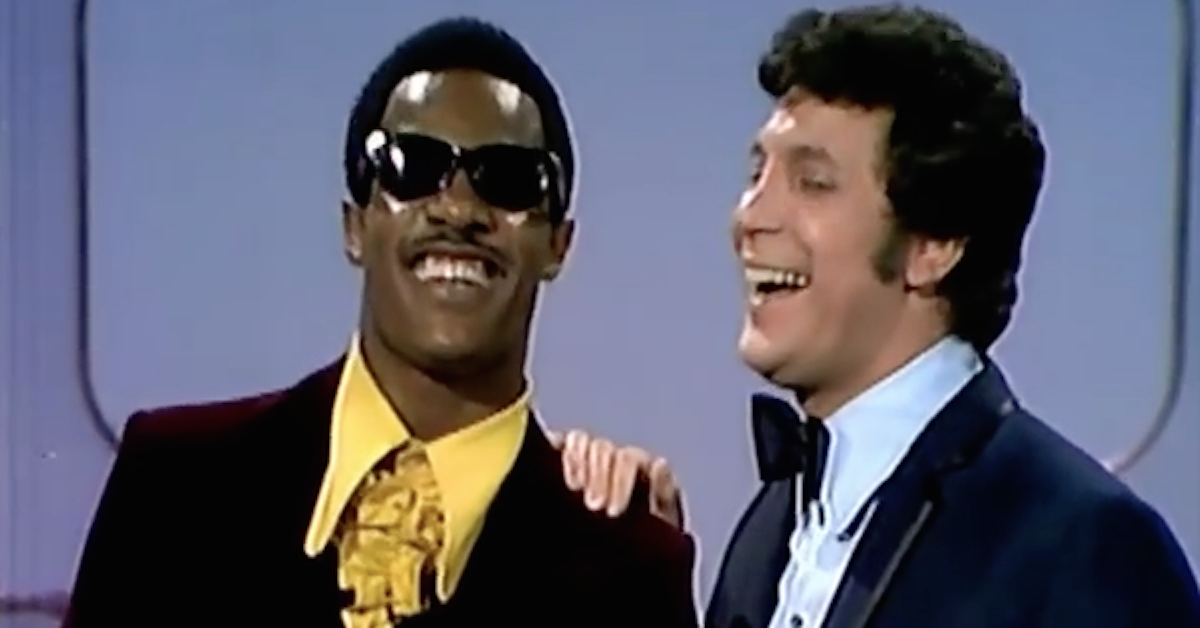
The story describes fellow coach will.i.am arranging the unexpected appearance during The Voice UK. Jones had been prepared to judge hopeful performers, making the change in roles especially touching. A coach spends much of an evening responding to other people’s ambition, nerves, and excitement. This time, someone had prepared a moment for him. The surprise gave him an opportunity to stop evaluating, stop guiding, and simply experience the pleasure of being remembered by a friend.
Wonder’s choice of song supplied the emotional connection. “It’s Not Unusual” carries the brightness of an introduction, forever associated with the emergence of Jones’ unmistakable voice. For a singer who has performed a signature song countless times, hearing it returned through another musician’s interpretation can offer a different perspective. The melody becomes both familiar and newly personal, reflecting the affection of the person choosing to play it.

The harmonica added another layer of recognition. Wonder’s musical identity is so distinctive that the instrument could make the greeting feel unmistakably his. Within the scene described, two familiar musical signatures met: Jones’ breakthrough song and Wonder’s expressive playing. That combination gave the tribute its warmth. It allowed one artist to acknowledge another while contributing something individual, making the performance feel like a conversation between people who understood each other through music.
Jones’ reported reaction became the heart of the moment. Audiences are accustomed to watching him offer encouragement, share a memory, or deliver a vocal passage that commands a room. Seeing him struggle to contain his own emotion creates a more intimate connection. A tribute can reach someone unexpectedly, particularly when it comes from a peer whose regard carries personal meaning. The feeling arrives before there is time to decide how publicly to show it.

For viewers, the encounter offers a reminder that a long career contains relationships as well as achievements. The recordings and performances become public landmarks, but the people encountered along the way can give those years their emotional shape. A familiar colleague remembers experiences an audience never witnessed. A longtime friend recognizes the person behind the celebrated name. In the account, Wonder’s greeting seemed to acknowledge that larger life surrounding the songs.

There is also tenderness in the role will.i.am reportedly played. Arranging a surprise for a colleague requires paying attention to what might matter to that person. Rather than making Jones’ career an abstract subject, the gesture brought someone meaningful into the room through a screen. It turned admiration into an experience Jones could receive directly. The simplicity of that connection helped make a polished television setting feel, for a few minutes, like a gathering of friends.
The story’s lasting appeal rests in that exchange of gratitude. One musician offered a familiar melody, another received it with visible feeling, and audiences were invited to witness the affection between them. Beyond the red chair and the studio lights, the moment speaks to a wish many people share: to know that their work has mattered and that the people alongside them remember. For Jones, the song described here carried more than memories of a breakthrough. It became a greeting from a friend—a reminder that after years of giving music to others, there is still joy in hearing someone play a little of it back for you.