▶ Watch the full video at the end of the article.
For a few joyful minutes, the President of the United States was singing along like everyone else. Paul McCartney had reached the familiar closing refrain of “Hey Jude” when Barack Obama moved toward the performers, joining an ending that seemed to invite the whole room closer. What began as an evening honoring an extraordinary songwriter became something warmly familiar: people sharing a song they knew by heart, smiling through a chorus that needed almost no introduction.
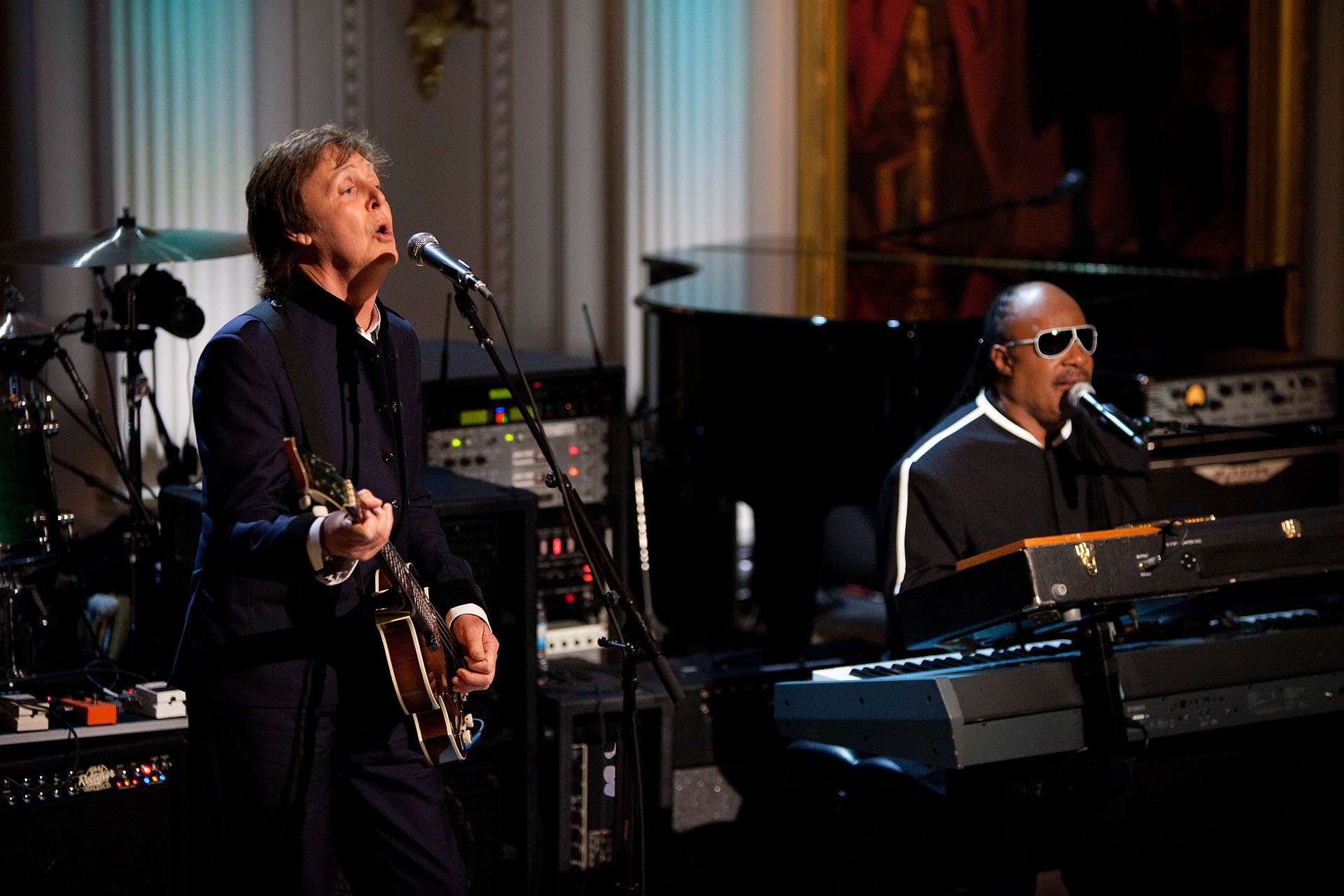
The performance took place on June 2, 2010, in the White House’s East Room, during a concert celebrating McCartney’s receipt of the Library of Congress Gershwin Prize for Popular Song. He was 67, just weeks away from turning 68, and decades into a career whose music had crossed borders and generations. The occasion recognized his remarkable contribution to songwriting, but the finale expressed that achievement in a particularly immediate way—through the willingness of everyone around him to sing. whitehouse.gov
“Hey Jude” was perfectly suited to that transition from formal celebration to shared enjoyment. Its opening invites close listening, allowing the melody and words to establish an intimate connection. Then the song gradually expands, making space for more voices. By the time its famous refrain arrives, participation feels natural. A listener does not need a polished voice or an understanding of musical technique. Remembering the melody is enough to become part of the performance.

Obama and his family joined the musicians for the finale, alongside an ensemble that included Stevie Wonder, Dave Grohl, Jack White, Elvis Costello, and Emmylou Harris. The gathering brought together people known for very different kinds of public work, yet the song gave them a simple shared role. They could listen, follow McCartney’s lead, and add their voices to a musical moment larger than any individual contribution. pitchfork.com
That is what makes the scene so charming to revisit. A presidential room carries expectations of ceremony, carefully arranged appearances, and clearly defined positions. A singalong loosens those boundaries. The focus moves toward recognition and enjoyment: someone hears a familiar phrase, another person joins, and the feeling travels through the group. Watching Obama beside McCartney offers the pleasure of seeing a public figure experience an ordinary enthusiasm in an extraordinary setting.

For McCartney, the evening also illustrated how thoroughly a song can enter other people’s lives. A melody begins with its writer, but listeners gradually attach their own experiences to it. They remember where they heard it, whom they sang it with, or why it offered comfort at a particular time. When those listeners gather, the same song holds many histories at once. The White House finale made that usually invisible connection briefly visible through faces, voices, and shared attention.
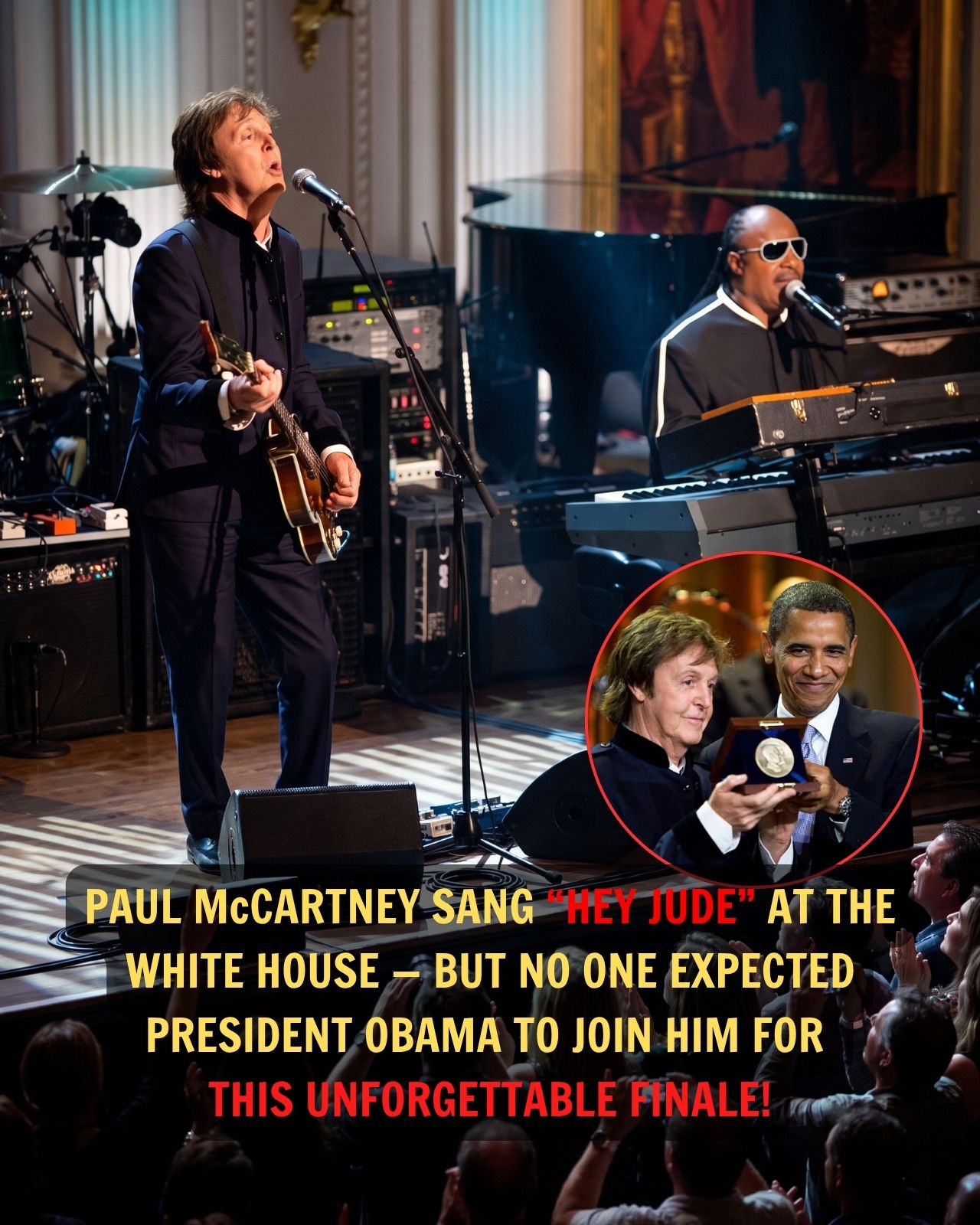
The intimacy of the setting gave the performance another quality. McCartney has led enormous crowds through the song, but a smaller room allows viewers to notice the exchanges between people standing close together. The enjoyment becomes personal and easy to read. An occasion built around honoring one musician ends with that musician encouraging everyone else to participate, demonstrating the connection between songwriting and community through the performance itself.
Years later, the scene remains memorable because its happiness is so recognizable. Beyond the distinguished setting and famous participants, it captures the pleasure of belonging to a chorus. Nobody needs to carry the song alone; each voice can join the voices already there. Revisit the finale, and watch how naturally the gathering becomes a group of listeners enjoying themselves together. That is the enduring gift of this White House moment: a celebrated songwriter offering a familiar melody, a president stepping into the music, and a room discovering how easily one song can become a memory shared by everyone present.