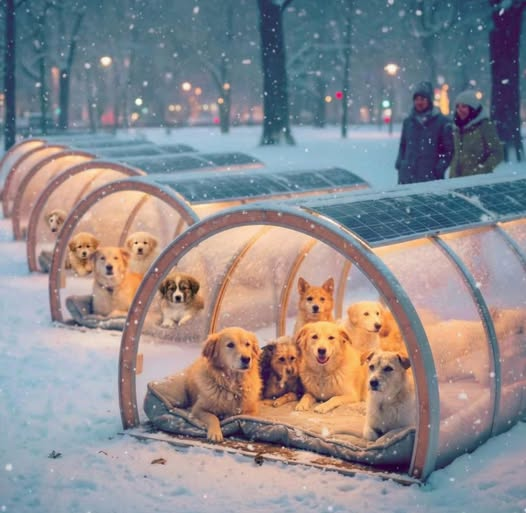
As winter temperatures plunge below freezing, Hungary has introduced an innovative yet simple solution to protect stray dogs from extreme cold: heated tunnel-shaped shelters designed to provide warmth, safety, and survival for the most vulnerable animals.
A Practical Response to Harsh Winter Conditions
Each winter, thousands of stray dogs across Central Europe face life-threatening weather conditions. In Hungary, prolonged periods of sub-zero temperatures significantly increase the risk of hypothermia, especially for injured, elderly, or weakened animals living on the streets.
To address this urgent problem, animal welfare organizations—working alongside designers and local volunteers—have developed insulated tunnel-style shelters, strategically placed in urban and suburban areas where stray dogs are most commonly found.
Shelters Designed Like Natural Dens

These structures go far beyond traditional dog houses. Their elongated shape and narrow, curved entrances are intentionally modeled after natural dens, helping dogs feel instinctively protected while also minimizing heat loss.
Constructed from recycled insulating materials, the tunnels effectively block wind, snow, and moisture. Inside, thermal bedding, often made from compressed straw or moisture-resistant blankets, helps maintain a stable internal temperature even during the coldest nights.
Some shelter models also incorporate passive heating systems, using ground warmth or solar exposure to retain heat without relying on continuous electricity.
Fast and Measurable Impact
According to volunteers working on the ground, stray dogs quickly learn to recognize these shelters as safe spaces. An unexpected behavior has also been observed: dogs that are usually wary of one another sometimes share the tunnels, huddling together to conserve body heat.
In several pilot regions, local organizations have reported a notable reduction in hypothermia cases and winter-related deaths among stray dogs. These encouraging results have led to the expansion of the program into additional areas across the country.
A Sustainable and Replicable Approach
Beyond its immediate benefits, the project reflects a broader commitment to sustainable and humanitarian design. The shelters are low-cost, easy to install, and portable, making them adaptable to different environments and climates.
Organizers emphasize that the initiative is not intended to replace long-term solutions such as sterilization, adoption, or shelter programs. Instead, it serves as a critical emergency measure, helping animals survive extreme conditions when other resources are limited.
A Small Idea With a Big Impact
Though simple in appearance, the tunnel shelters demonstrate how thoughtful design and compassion can save lives. In Hungary, these heated refuges have become more than just shelters—they represent a tangible commitment to protecting animals that cannot protect themselves.
As winters grow increasingly unpredictable, initiatives like this may offer a model for other countries seeking humane, practical solutions to support stray animals during the harshest months of the year.