Luigi Mangione’s guilty plea in federal court has dramatically changed the legal landscape surrounding the killing of UnitedHealthcare CEO Brian Thompson, but it has not brought the case to a simple conclusion. Mangione, 28, pleaded guilty on August 14 to two federal stalking charges connected to Thompson’s December 2024 killing in Manhattan, admitting conduct that prosecutors say culminated in the fatal shooting. Yet instead of resolving every question surrounding his future, the plea has opened a new and complicated fight over sentencing, double jeopardy, and whether New York prosecutors will still be allowed to put him on trial for murder.

One of the biggest misconceptions surrounding the plea is that Mangione received a traditional plea deal guaranteeing him a specific sentence. According to reporting from Reuters and other major outlets, there was no agreement fixing his punishment at a particular number of years. Federal prosecutors are seeking a life sentence, and U.S. District Judge Margaret Garnett has scheduled sentencing for December 18. That means the guilty plea removed the uncertainty of a federal trial, but it did not remove the possibility that Mangione could spend the rest of his life in prison.

The federal case itself had already changed significantly before the plea. Earlier this year, Judge Garnett dismissed federal murder and firearms counts that had exposed Mangione to the death penalty, leaving two stalking charges as the central federal prosecution. Those remaining charges are serious enough to carry a potential life sentence, which is why Friday’s guilty plea still represents an enormous legal turning point even without a murder conviction in federal court.
But the most consequential question may now be unfolding several blocks away in the New York state court system. Mangione has separately pleaded not guilty to state murder and weapons charges, with that trial scheduled to begin on September 8. Immediately after entering his federal guilty plea, his lawyers moved to dismiss most of the state case, arguing that New York’s protections against double jeopardy should prevent prosecutors from trying him again over the same underlying conduct.

That argument is more complicated than the familiar idea that a person simply cannot be prosecuted twice for the same crime. Under the federal Constitution’s “dual sovereignty” doctrine, state and federal governments can sometimes bring separate prosecutions based on the same conduct because they are considered separate sovereigns. New York law, however, contains additional protections limiting successive prosecutions, and Mangione’s attorneys argue those protections now apply because the federal stalking offenses and state murder case overlap so heavily. The Manhattan District Attorney’s Office is expected to fight that interpretation and has made clear it still intends to pursue the state case.
Legal experts quoted in current reporting say Mangione’s defense may have a serious argument, although the outcome is far from guaranteed. If the state judge accepts the double-jeopardy claim, most of the New York prosecution — including the second-degree murder charge — could potentially be dismissed. If prosecutors prevail, Mangione could still face a separate state trial despite having already admitted in federal court to conduct directly connected to Thompson’s death. Appeals are also possible, meaning the fight over whether the state trial can proceed could extend well beyond the currently scheduled September date.

The guilty plea also carried an extraordinary moment of direct acknowledgment. In federal court, Mangione admitted that he tracked Thompson and fatally shot him, while acknowledging that he knew his actions were illegal. Prosecutors have emphasized that frustration with the American healthcare system cannot justify violence, while Thompson’s family has described the guilty plea as an important step toward accountability.
For now, Mangione remains at the Metropolitan Detention Center in Brooklyn while the legal battles continue. His immediate future involves two critical dates: the currently scheduled September 8 state trial and his December 18 federal sentencing. Whether both proceedings ultimately happen remains one of the defining questions of the case.
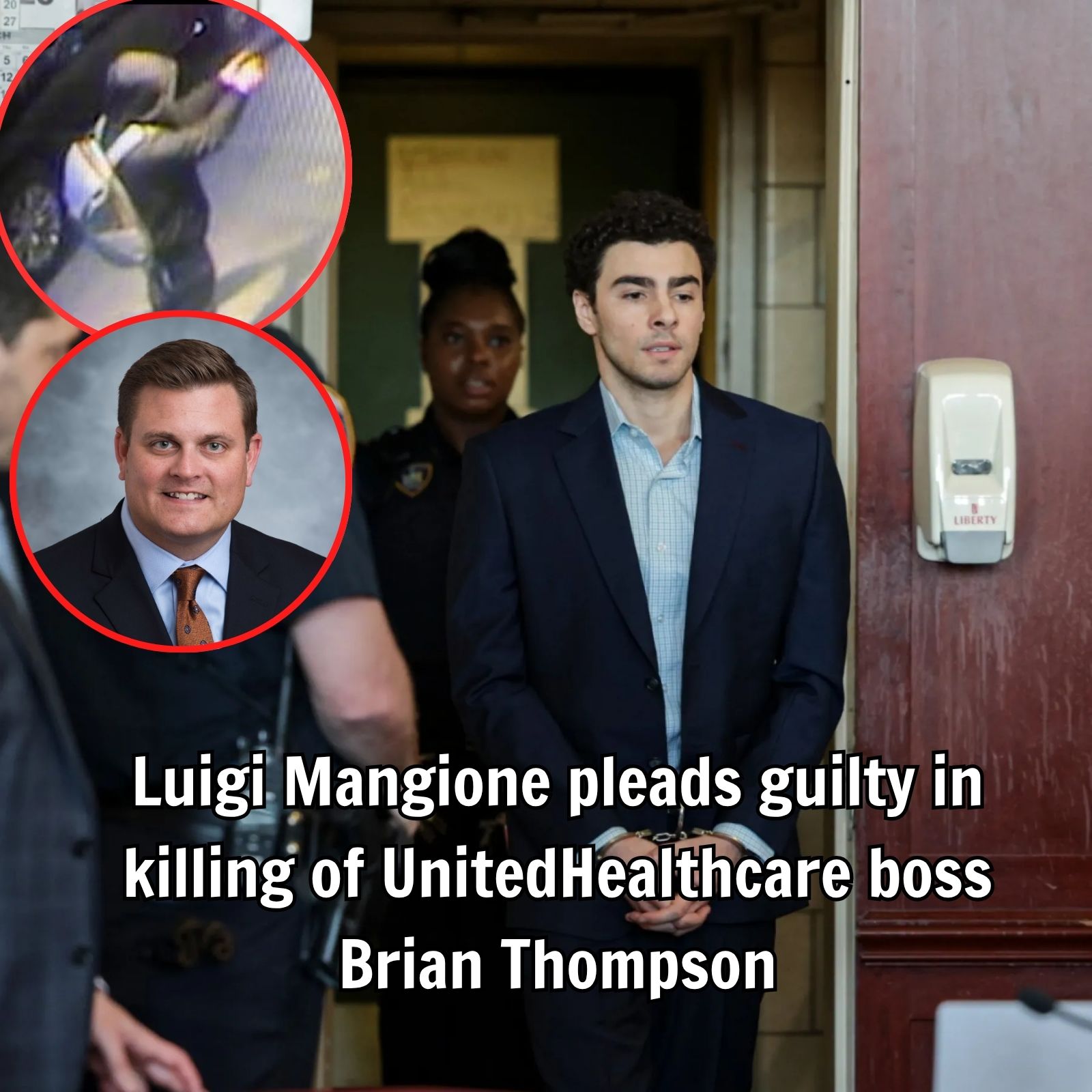
That is why Mangione’s guilty plea should not be understood as the final chapter. It may instead prove to be the move that determines which courtroom gets the final word. Federal prosecutors want life imprisonment, state prosecutors still want to try him for murder, and his attorneys are arguing that the federal conviction should prevent New York from proceeding at all.
The plea answered one enormous question about responsibility. What it did not answer is where Luigi Mangione will ultimately be sentenced, which convictions will remain on his record, and whether the legal strategy behind Friday’s decision will protect him from a second trial — or leave him facing another courtroom, another prosecution, and potentially the rest of his life behind bars.