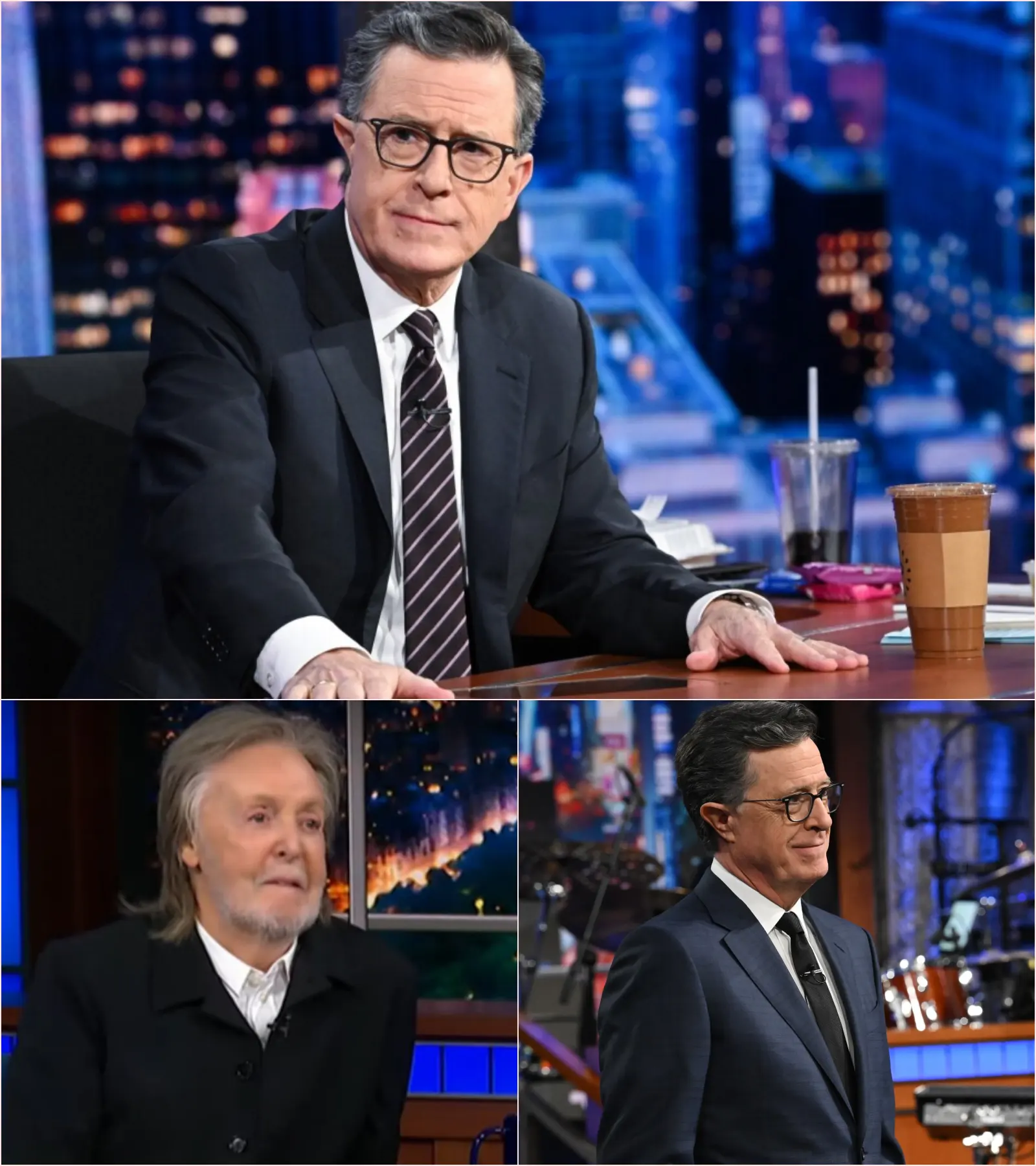
The late-night world was already emotional before Paul McCartney stepped into the story, but his appearance during Stephen Colbert’s final Late Show made the farewell feel bigger than television. CBS had announced the end of The Late Show with Stephen Colbert months earlier, saying the decision was financial, not creative or political. Yet the timing of the cancellation, coming after Colbert sharply criticized Paramount’s settlement with Donald Trump, left many viewers convinced there was more beneath the surface than a simple business calculation.

That tension is why a fiery viral story about McCartney supposedly calling network figures “lying weasels” caught so much attention online, even though that specific quote has not been verified by reliable sources. Fans were already looking at the finale as more than a goodbye. They saw it as a test of whether late-night television could still speak honestly when corporate pressure, political anger, and shrinking broadcast economics all seemed to be closing in at once.
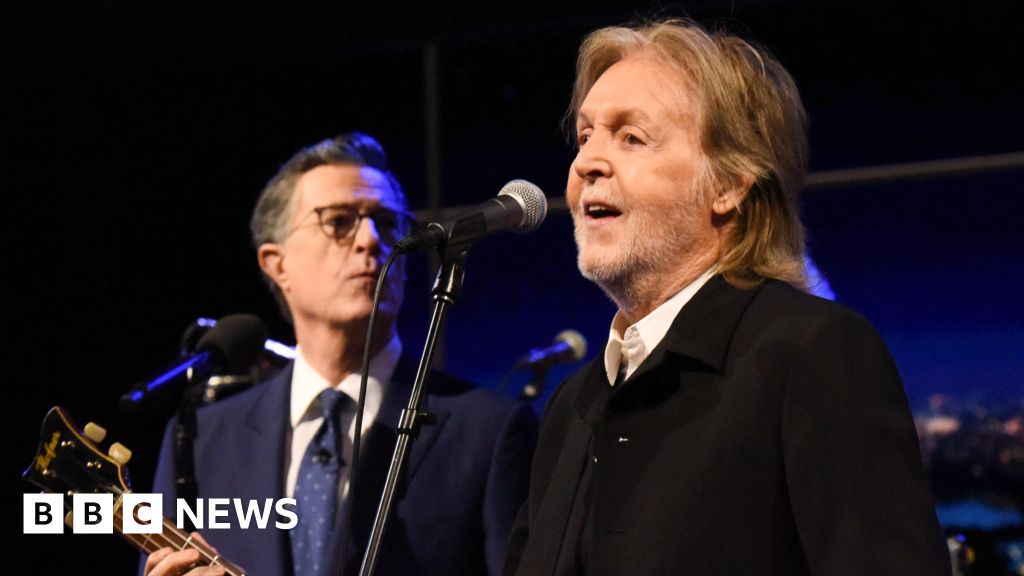
McCartney’s actual role in the finale was not a shouted attack, but it carried its own power. The former Beatle joined Colbert for a joyful performance of “Hello, Goodbye,” a song whose title suddenly felt perfectly chosen for the end of a long television era. The Associated Press reported that McCartney also gifted Colbert a framed photo of The Beatles at the Ed Sullivan Theater, tying the finale to one of the most historic stages in American entertainment.
That symbolism mattered. The Ed Sullivan Theater was where The Beatles helped change American pop culture in 1964, and more than six decades later, McCartney returned to that same building as another chapter of television history closed. He did not need to deliver a profanity-laced speech for the moment to feel defiant. His presence alone suggested continuity, memory, and the stubborn survival of performance in a business that often treats even beloved institutions as numbers on a balance sheet.
:max_bytes(150000):strip_icc()/GettyImages-2276998798-ab9fad66611c40939613d50c38d4da01.jpg)
The finale itself leaned into absurdity, emotion, and satire. Reports described celebrity cameos, surreal sketches, musical performances, and a closing sequence that treated the end of the show as both a celebration and a strange little act of rebellion. Colbert had always mixed comedy with moral seriousness, and his last episode reflected that balance: silly enough to laugh through the pain, heartfelt enough to remind viewers what they were losing.
That is where the viral phrases like “The Big Fat Bribe,” “Roof Chair,” and “Furniture Destruction Autopsy” appear to fit emotionally, even if they are not confirmed as McCartney’s words. They sound like the exaggerated language of fans trying to describe a finale that felt chaotic, satirical, and loaded with anger beneath the jokes. Late-night comedy has always used absurd objects, fake investigations, and ridiculous labels to say what polite language sometimes cannot.
What stunned fans most was not that Colbert went out with humor. That was expected. It was that the final week became a larger conversation about who gets to remain on the air, who gets silenced, and whether corporate explanations can fully satisfy an audience that has watched Colbert challenge political power for years. CBS said the decision was financial, but the surrounding debate made the cancellation feel symbolic.
McCartney’s appearance gave that symbolism a human face. Known for warmth, humor, restraint, and a lifelong association with songs of connection, he represented something larger than celebrity support. He represented the idea that art can stand beside satire, and that music can turn a farewell into a communal act.
In the end, the confirmed moment was not Paul McCartney screaming insults at executives. It was Paul McCartney helping Stephen Colbert say goodbye in a room full of history, laughter, and unresolved tension.
And perhaps that is why the moment still feels powerful. You can cancel a show, but you cannot erase the voice it gave people while it was here.