❤️🇺🇸🎶
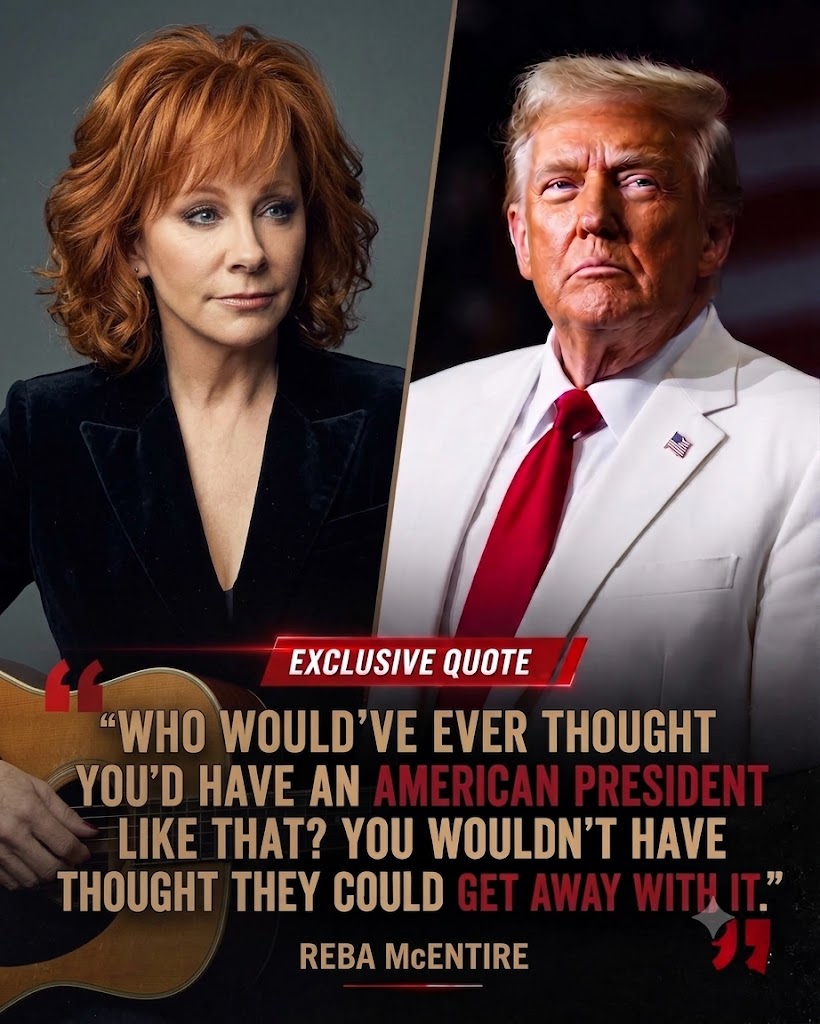
Reba McEntire has spent decades singing to people who do not all think alike, vote alike, worship alike, or live alike, and that reality seems to have shaped the way she approaches politics. Rather than using the stage to tell audiences what they should believe, the Oklahoma-born country legend has repeatedly said that she sees her role differently: she is there to entertain, to offer people a break from everyday worries, and to use music as a place where strangers can share something without first agreeing on everything else. In a 2017 interview, Reba put it plainly, saying she believed she was “put on this earth to help people through music” and that getting involved in politics was not her job.
That philosophy has remained one of the clearest threads running through Reba’s public life. When asked why she did not use concerts to give audiences her political views, she explained that fans had spent their hard-earned money on tickets, parking, food, and an evening away from the pressures of daily life. She wanted them to leave feeling lighter, not feeling as though they had attended a political rally. On another occasion, she said Americans have the right to speak politically or choose not to, while making clear that she personally preferred to keep her concerts focused on entertainment.

That does not mean Reba has never spoken about public issues. In 2023, for example, she criticized Tennessee’s restrictions on drag performances and questioned why political energy was not being directed toward problems such as hungry and homeless children. In that same interview, however, she again emphasized that she did not participate in political campaigns and did not see her job as influencing people’s votes. Her position, then, has been less about silence than about drawing a line between expressing a personal concern and turning her career into a partisan platform.
That distinction became especially visible when Reba performed “The Star-Spangled Banner” at Super Bowl LVIII in February 2024. Speaking beforehand, she said the performance was “not about me” and described her responsibility as bringing “the patriotism.” She said she was singing not only for the athletes and people involved in the game, but also for those who had worked to protect freedom and pursue peace.

For an artist whose catalog has always returned to family, faith, heartbreak, endurance, and ordinary American life, that moment felt closely connected to the larger story of her career. Reba’s songs have rarely depended on telling listeners what side to choose. They have survived because they speak to experiences that cross political boundaries: losing someone, loving someone, raising a family, starting again after disappointment, holding onto faith, and trying to get through another difficult day.
That may be why her approach continues to resonate with people who are exhausted by political division. It does not ask Americans to stop having convictions, and it does not suggest that serious disagreements should disappear. Instead, it reflects a simpler belief about what music can sometimes do: create a temporary space where those disagreements are not the only thing defining the people in the room.

When Reba walks onto a stage, the audience may include Republicans, Democrats, independents, and people who would rather avoid politics entirely. But once the lights dim and the first familiar notes begin, those labels temporarily lose some of their power.
For a few minutes, people sing the same song.
And in an America that often feels divided, Reba McEntire’s message has remained remarkably consistent: she is not there to tell the person beside you how to vote. She is there to give both of you something worth listening to together.