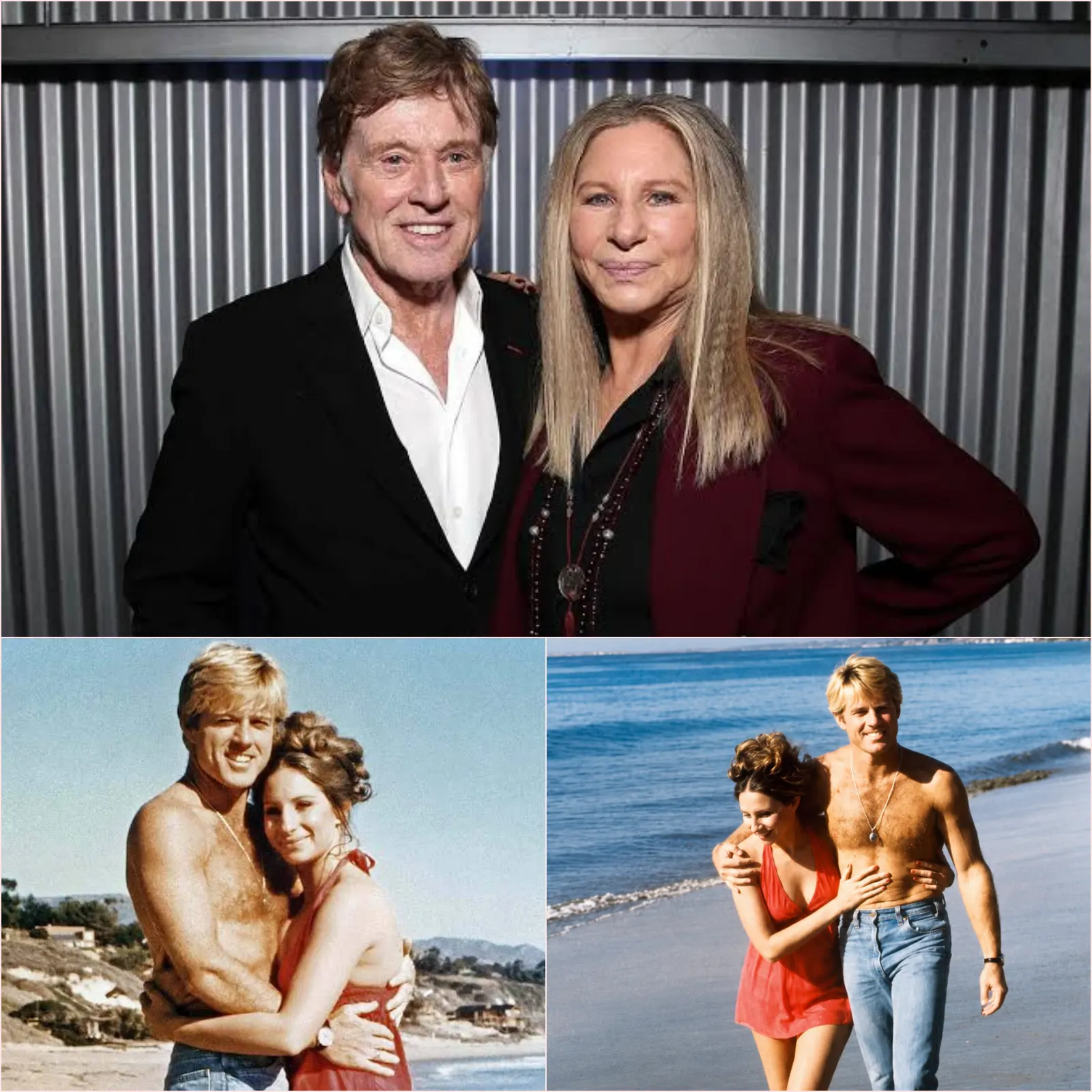
Few screen pairings have remained as emotionally powerful as Barbra Streisand and Robert Redford in The Way We Were. More than five decades after the film first reached theaters, audiences still remember the way Katie Morosky looked at Hubbell Gardiner, the tenderness in their quietest scenes, and the devastating realization that love does not always guarantee a life together. Their chemistry felt so intimate and painfully real that generations of fans have continued wondering whether something deeper existed between the two stars after the cameras stopped rolling.
They came from very different worlds, both onscreen and away from it. Streisand was a force of ambition, emotion, and fearless determination, a Brooklyn-born performer who had already conquered Broadway, music, and film by refusing to become the version of a leading lady Hollywood expected. Redford represented a different kind of power. His strength was quiet, restrained, and often mysterious. Behind the famous face was an artist increasingly drawn toward independent storytelling, environmental protection, and films that examined America’s ideals and contradictions.

Together, those differences created something extraordinary. In the 1973 romantic drama, Streisand played Katie, a politically passionate woman whose convictions shaped every part of her life. Redford portrayed Hubbell, a gifted writer whose charm and talent were matched by his reluctance to confront conflict. Their love story was built on attraction, admiration, frustration, and the heartbreaking truth that two people can belong together emotionally while remaining unable to build the same future.
The film’s final scene became one of cinema’s most enduring farewells. Years after their marriage had ended, Katie and Hubbell unexpectedly met again outside New York’s Plaza Hotel. She reached toward him and gently brushed the hair from his forehead, repeating a gesture that carried the full weight of everything they had once shared. There was no dramatic reunion and no promise that they would try again. The moment acknowledged that their love had been real, even though it could not survive the differences between them.
Fans have often assumed that such chemistry must have come from a real-life romance, but Streisand and Redford were not publicly known to have had a romantic relationship. Their connection was reportedly built through mutual respect, artistic trust, and the unusual tension created by their contrasting personalities. That may be the surprising detail that continues to fascinate viewers: the longing that seemed so authentic onscreen did not require a secret love affair behind the scenes. It came from two extraordinary performers understanding exactly what the story demanded.
Redford was reportedly hesitant about accepting the role at first. Some accounts suggest he felt Hubbell was not fully developed and worried the character might appear passive beside Katie’s intensity. Streisand, however, believed he was essential to the film. She reportedly saw in Redford the perfect combination of intelligence, beauty, distance, and vulnerability. His emotional restraint gave her passionate performance something to push against, creating the tension that made the relationship believable.

Their influence ultimately reached far beyond one famous movie. Streisand continued breaking barriers as a singer, actor, director, producer, and songwriter, often fighting for creative control in an industry that did not easily grant it to women. Redford became a champion of independent filmmakers through the Sundance Institute while using his public voice to support environmental preservation and civic responsibility. Both proved that fame could become more than personal success; it could be used to open doors, challenge institutions, and protect causes larger than any individual career.
Yet The Way We Were remains the place where their legacies meet most tenderly. The film captured two people who loved each other deeply but could not become smaller versions of themselves to remain together. Katie could not abandon her principles, and Hubbell could not fully live inside her constant struggle. Their separation was painful because neither person was entirely wrong.
Perhaps that is why Barbra Streisand and Robert Redford still fascinate audiences. They did not give viewers a perfect romance. They gave them something more honest: a love that changed two lives, survived in memory, and remained meaningful even after goodbye. Their connection reminds us that some people are not meant to stay forever, yet the time shared with them can become part of who we are for the rest of our lives.