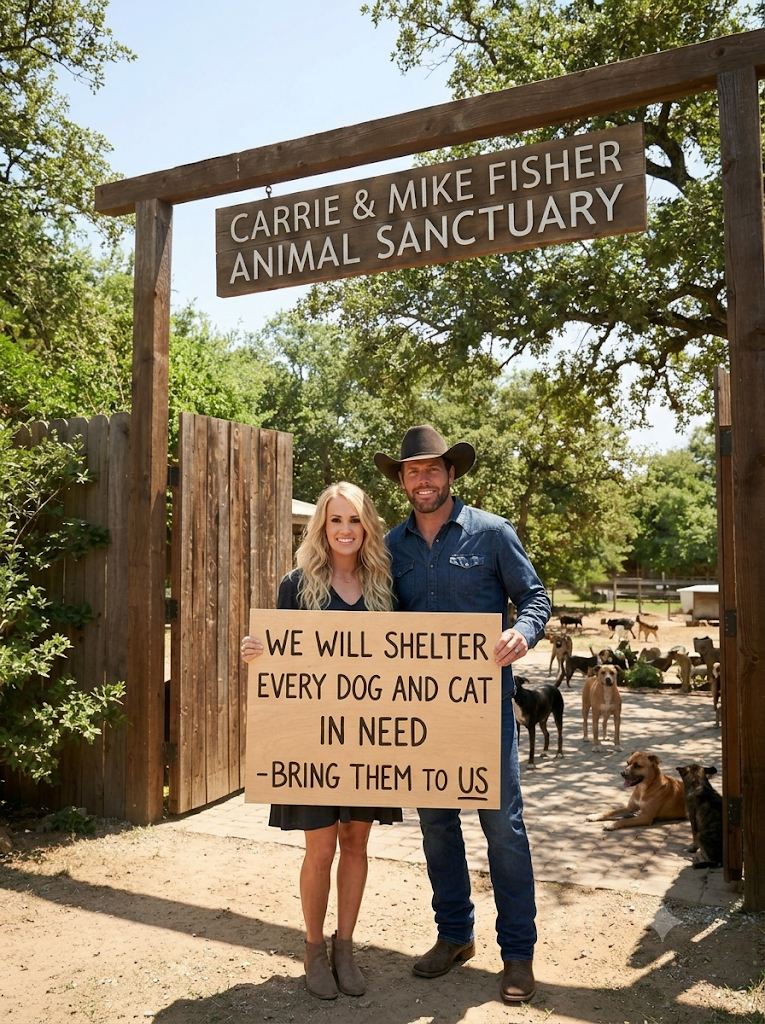
The frightened dog keeps its distance at first. In the imagined opening of Hope Haven, a Tennessee animal sanctuary, Carrie Underwood kneels a few feet away and waits. Nearby, her husband, former NHL player Mike Fisher, approaches an aging horse with the same patience, letting it get used to his presence. The story puts a $15 million price tag on the sanctuary, but its most memorable scene costs nothing: two people with somewhere else they could be, taking as long as two animals need.

Hope Haven is the setting of an unconfirmed story about Carrie and Mike creating a place for abandoned, elderly, and injured animals. In this telling, the sanctuary would give them time to heal, whether that meant recovering from an injury or simply getting through a day without being afraid. An older horse might need a quieter paddock and a routine it can count on. A dog that backs away from an outstretched hand might need the same person to bring its dinner every evening until footsteps begin to mean something good.
When someone in the story asks Carrie why they would put so much into a place like this, her answer is as plain as the scene with the dog.
“They can’t ask for help. But that doesn’t mean they don’t deserve it.”

There’s a practical side to that thought. A rescue animal can’t explain why a particular sound makes it flinch, or tell someone that the way it’s standing has changed because something hurts. The people caring for it have to pay attention and learn what those small changes mean. In the Hope Haven story, that work would go on long after the excitement of an opening day. It would happen when someone notices an untouched bowl, checks on a horse before breakfast, or realizes that a dog which used to hide is waiting by the gate.

The story describes each new arrival being welcomed with the same promise: “You’re safe now.” For the people saying it, the words would mark a beginning. For the animals, safety would become something they could recognize over time. The next person through the door would move slowly. There would be clean bedding again tomorrow. An animal that wanted to stay in the corner could stay there until it was ready to move. The promise would take shape through all the small things that happen the same way, day after day.
Then there’s the private room. The account never says what Carrie and Mike would keep behind that door, which makes it easy to imagine something elaborate. A more moving possibility is that the space would be set aside for the quietest parts of the work. It could be where a volunteer sits with a dog through its first night, or where someone keeps company with an animal too old or ill to be moved. A room like that would explain the purpose of Hope Haven without a plaque on the wall. It would be somewhere to stay when staying is the only thing left to offer.

That possibility gives the Tennessee setting a warmth that fits the values listeners hear in Underwood’s music. Her songs about faith and perseverance often find their emotional footing in someone reaching the end of what they can manage alone. Hope Haven imagines an answer to that kind of need in a different setting. It gives Carrie and Mike a role that depends on being present, and it gives the animals time to decide what to make of the people who have come to help.
The best ending for the dog in that opening scene might be easy to miss. It might take one step toward Carrie, stop, then decide it’s comfortable enough to lie down. The horse might lower its head while Mike stands nearby. In the imagined sanctuary, either moment would be worth waiting for. It would mean that the words spoken at the door were beginning to feel true to the ones they were meant for.