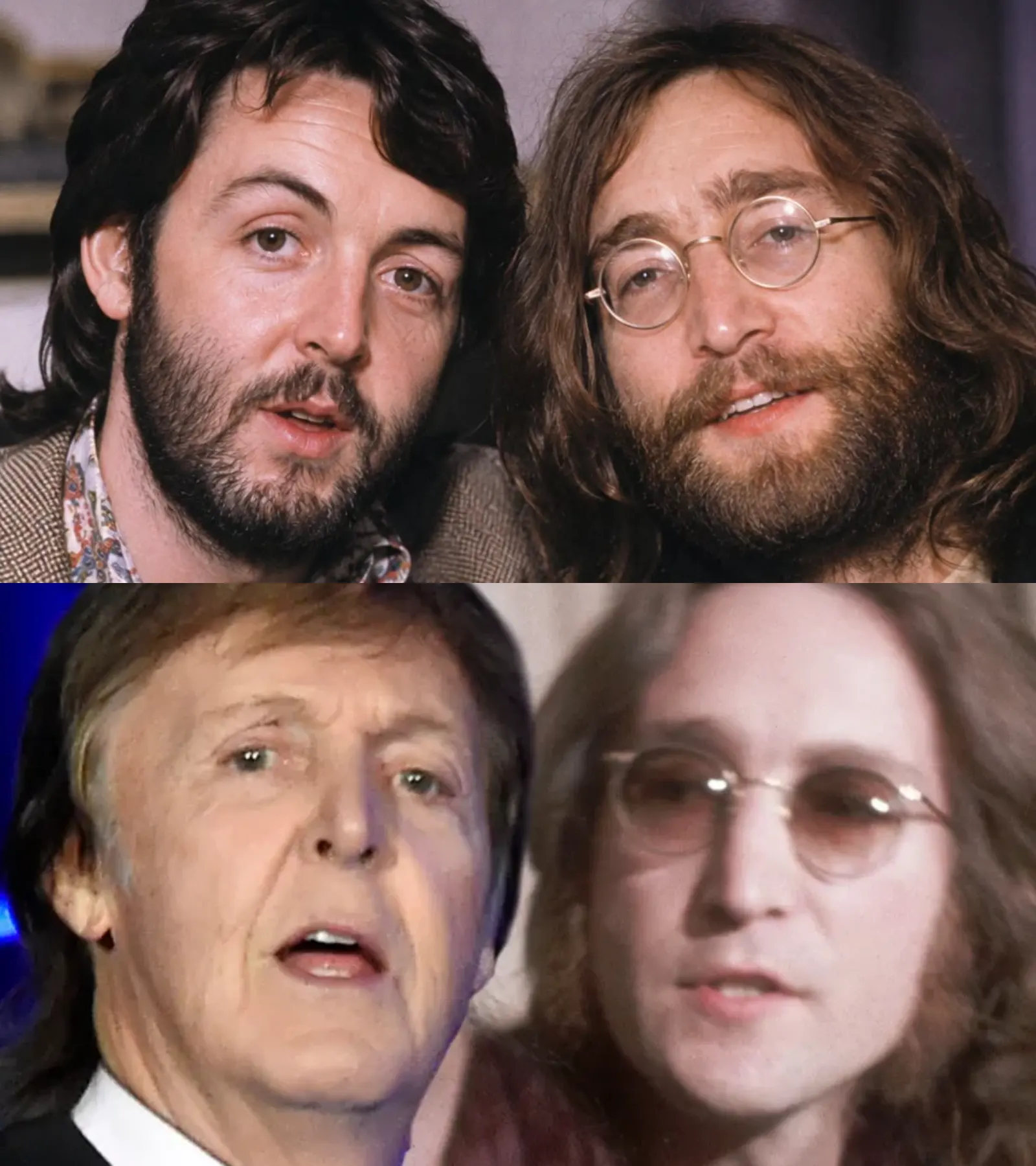
On a July afternoon in 1957, Paul McCartney heard John Lennon sing at a church garden party in Woolton, Liverpool. John was there with the Quarrymen; Paul had come as a visitor and was introduced by a mutual friend. When Paul got the chance to play, he knew words and chords that John hadn’t quite worked out. John had something Paul wanted to be around, too: the nerve to get up in front of people and make a song his own. The meeting could have ended with each boy going home impressed. Instead, they started finding reasons to play together.

They learned songs they loved and dared each other to write their own. There was pleasure in bringing over half a tune and finding out what the other boy heard in it. A line that seemed to lead nowhere could get an answer; a melody could turn a corner neither had expected. Competition was part of the fun. Each had someone close by who could tell when an idea needed more work, and who might arrive the next day with something better.
Once the Beatles took off, that private exchange became the source of songs people learned all over the world. “She Loves You” and “I Want to Hold Your Hand” made the excitement of wanting someone feel immediate. “A Hard Day’s Night” could turn a complaint about work into a burst of pleasure. As their writing grew more individual, the shared credit stretched to hold songs as different as “Yesterday” and “Hey Jude.” Lennon–McCartney came to mean a body of work large enough for listeners to keep discovering new corners of it as they grew older.

The closeness that made their early work possible also gave them plenty to argue about. John could feel crowded by Paul’s drive to keep the group working; Paul could see that drive as a way of keeping the Beatles together. After manager Brian Epstein died in 1967, business disagreements and diverging ambitions put more strain on the band. The records could still sound astonishingly assured while the people making them were growing less sure they wanted the same future. By 1970, the Beatles’ breakup was public, and John and Paul were making their way as separate artists.

One of the most revealing moments came four years later, when Paul and Linda visited John in Los Angeles. John and Paul ended up playing together in an informal studio session with other musicians. It never became a Beatles reunion or the start of another regular collaboration. Its charm lies in how little it needed to become. Two people who had spent years being asked about the end of their partnership could spend part of an evening doing what had brought them together in the first place.

John’s murder in New York on December 8, 1980, ended the possibility of another visit like that. Paul struggled to find words when reporters asked him about the loss. In the years that followed, he had more room to remember John with affection, including the funny, ambitious teenager he’d known before either of them had a reason to expect strangers to care what they wrote. There’s a particular grief in losing someone who remembers the beginning of your life’s work from the inside. They knew what you sounded like while you were still figuring out who you were.
Their friendship was big enough to contain rivalry, hurt, and stretches of distance. The songs preserve another part of it: the quick pleasure of an idea finding someone who knows what to do with it. That’s what makes the Woolton meeting worth returning to. Before the arguments about who led the band, before the records and the crowds, there was a teenager who knew how a song went and another who wanted to hear him play it. The rest began with them deciding to see each other again.