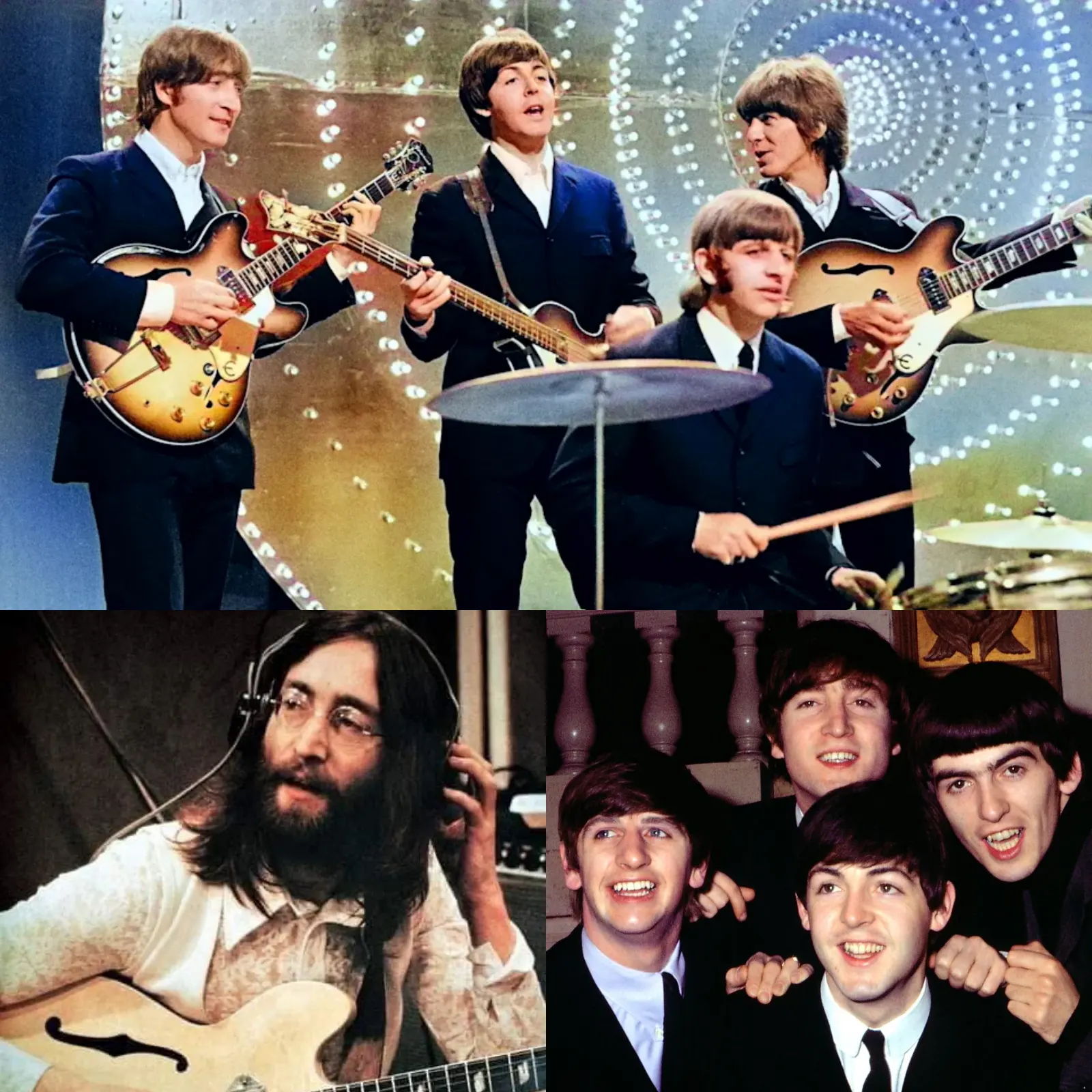
When discussing the Beatles’ late-period brilliance, “You Never Give Me Your Money” is often framed as one of Paul McCartney’s defining achievements on Abbey Road. Yet beneath the song’s wistful piano, shifting sections, and medley-bound architecture lies another story — a subtler, more intertwined narrative about the evolving roles of John Lennon and George Harrison on guitar. By 1969, the strict lines between “lead” and “rhythm” guitar had dissolved, giving way to something far more fluid: a shared sonic language built on overlapping textures, tone experiments, and instinctive interplay.
Breaking Free From Traditional Guitar Roles
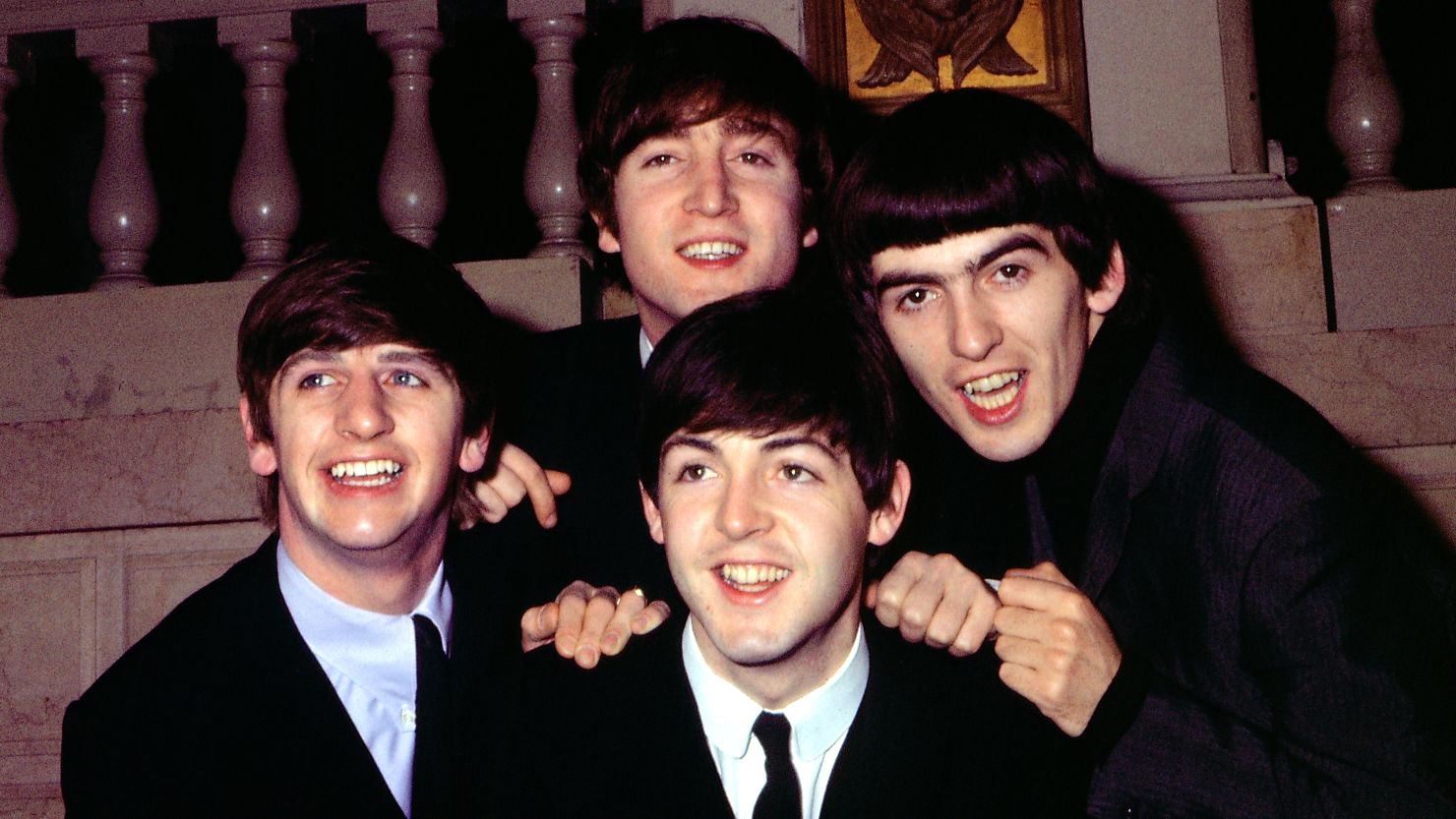
Unlike earlier Beatles recordings, where Lennon and Harrison often held clearly defined positions, Abbey Road showcased a band moving toward more collaborative instrumental layering. On “You Never Give Me Your Money,” this shift becomes especially visible — or rather, audible.
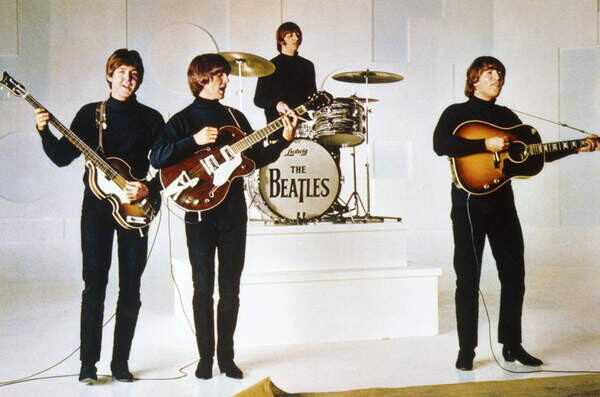
McCartney handled lead vocals and piano, while Ringo Starr anchored the performance with a warm, responsive drum track. But the guitars were not divided by hierarchy. Instead, John and George both contributed electric guitar parts that drift, overlap, and weave in ways that challenge any attempt to label one as “lead” and the other as “rhythm.”
John played his Epiphone Casino, favoring sharp, rhythmic stabs and biting accents. His tone carries a raw edge — unmistakably Lennon — grounding the song’s early transitions with immediacy and grit. George, by contrast, approached the track with a more spacious palette, using his Fender Telecaster piped through a Leslie rotating speaker, producing the swirling, almost liquid arpeggios that give the later sections their drifting, dreamlike quality.
Together, these parts function as one conversation. Not competing lines. Not stacked layers. A musical dialogue.
A Song Still Taking Shape in the Studio
What makes their interplay more fascinating is that “You Never Give Me Your Money” did not enter the studio fully formed. Early takes reveal a looser structure — at points even evolving into a fast rock-and-roll jam. Engineers noted that the song initially wandered into improvisational detours before McCartney and producer George Martin honed its place within the longer Abbey Road medley.
That looseness allowed space for experimentation. John and George weren’t restricted to filling their usual roles; instead, they explored tonal and rhythmic ideas that later solidified into the blended guitar presence heard on the final record. It was a moment in the Beatles’ career when boundaries — personal, musical, and structural — were shifting, and the guitars reflected that evolution.
Interconnected Ideas Across “Abbey Road”
Beatles author Ian MacDonald later pointed out how the song’s arpeggiated guitar figures echo textures found elsewhere on Abbey Road. The ominous, spiraling patterns in “I Want You (She’s So Heavy)” and the bright, flowing midsection of “Here Comes the Sun” both share a conceptual thread with the arpeggios George crafted for “You Never Give Me Your Money.” These observations highlight not only the creative momentum of the sessions but the cohesion across songs that were otherwise written by different members.
Additionally, the song’s fragment-based architecture — a McCartney hallmark — recalls the patchwork brilliance of Lennon’s “Happiness Is a Warm Gun.” Though the connection is interpretive rather than confirmed intent, it underscores a truth about the Beatles in 1969: ideas were bleeding across compositions, feeding each other, and helping shape an album that felt unified despite its varied songwriters.
Two Distinct Guitar Voices, One Unified Sound

What ultimately sets the track apart is its refusal to elevate one guitarist over the other. John and George were not competing players, but complementary forces. Lennon’s rhythmically sharp jabs and George’s fluid, rotating chords intersect in a way that obscures the dividing line. The result is a guitar part that feels less like two musicians trading roles and more like a shared instrumental voice.
This blending foreshadowed the mature, polished sound of Abbey Road — an album that relied not on the individual spotlight, but on the synergy of a band at its peak technical ability even as their personal relationships grew strained. Their guitars, paradoxically, sound more unified than ever.
A Song That Reflects a Moment of Transition

“You Never Give Me Your Money” marks both a sonic and emotional turning point within the album’s medley sequence, transitioning from disillusionment to possibility. The guitars mirror that emotional trajectory: Lennon’s sharp grounding gives way to Harrison’s airy textures, creating a musical metaphor for moving forward, even through uncertainty.
In that sense, the track isn’t simply “a Paul song.” It’s a collaborative underscoring of the Beatles’ evolving identity — one last burst of collective artistry before their paths diverged for good.
Listening With New Ears
Revisiting the track today, listeners may find renewed appreciation for its subtleties. The guitars aren’t flashy. They don’t dominate the mix. Yet they provide the connective tissue that carries the song from one emotional register to another.
The question becomes: Do you hear John and George as distinct voices — or as one continuous guitar conversation? The answer may depend on which details your ear gravitates toward: Lennon’s rhythmic urgency or Harrison’s swirling counterlines.
Either way, their interplay stands as one of the most elegant examples of the Beatles’ late-period magic — a reminder that sometimes the most powerful musical moments come not from separation, but from union.