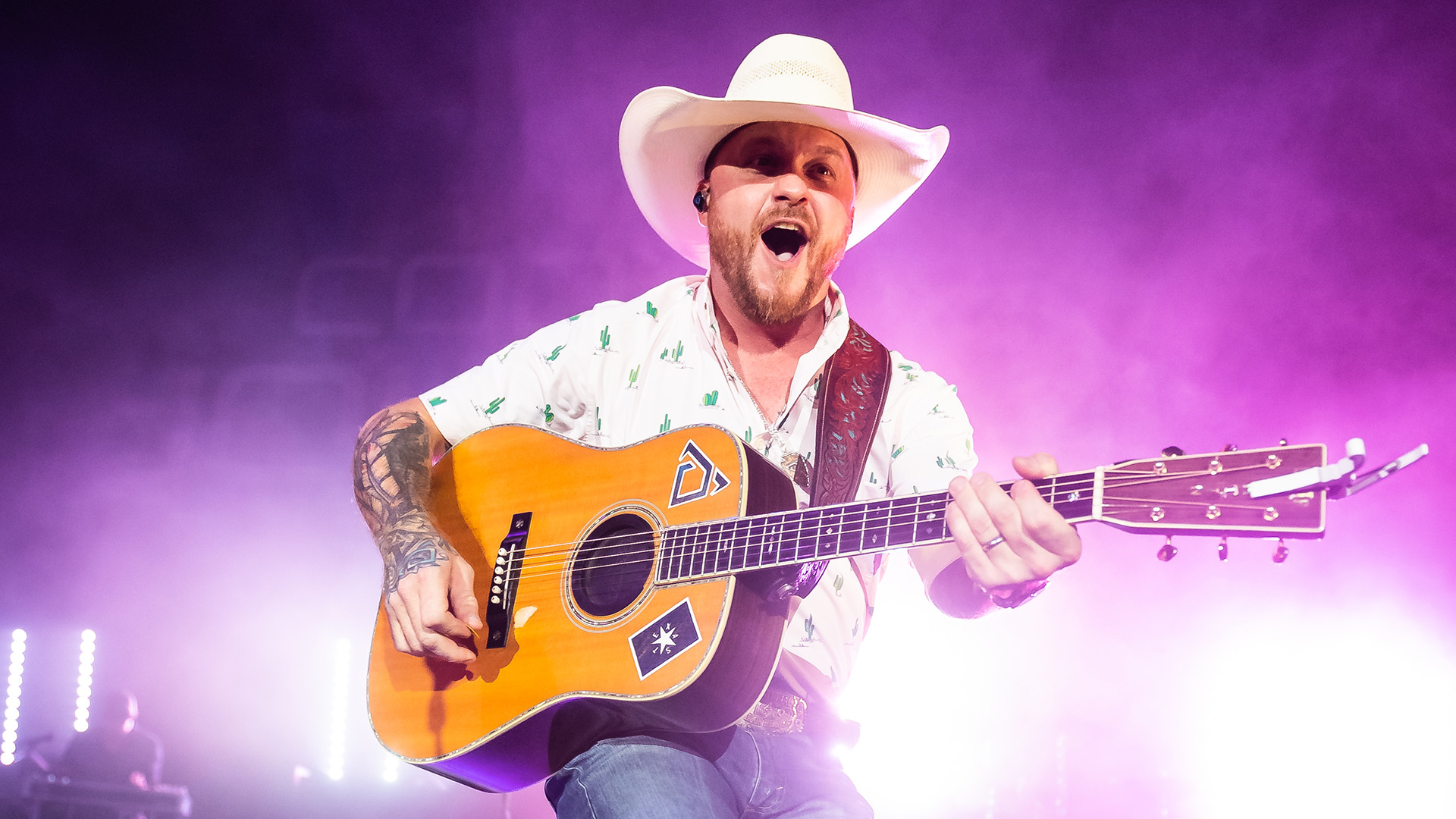
In a night destined for the record books at RodeoHouston, a number long considered untouchable finally gave way, as Cody Johnson drew a crowd of 80,203 fans, surpassing the 80,108 attendance record set in 2019 by George Strait, a milestone that had stood not only as a measure of popularity, but as a symbol of enduring connection between artist and audience. The achievement immediately captured headlines, signaling what many interpreted as a new chapter in country music’s ongoing evolution.
Yet the story did not end with the number.
It expanded.
Closing out the 94th Houston Livestock Show and Rodeo, Johnson delivered a performance that matched the scale of the moment, sustaining energy across a full-length set that kept the stadium engaged from the opening note through the final encore. With Jon Pardi and Randy Houser setting a strong foundation early in the evening and a surprise appearance from Carrie Underwood elevating the momentum even further, the night carried a sense of progression, building steadily toward a conclusion that would resonate far beyond the venue.

For many in attendance, the record-breaking crowd was not just a statistic, but a reflection of the atmosphere itself, as the collective energy of more than 80,000 fans transformed the stadium into something closer to a shared experience than a conventional concert setting. Johnson, known for his ability to connect with audiences on a personal level, leaned into that dynamic, delivering a performance that felt both expansive and grounded at the same time.
As the final moments approached, however, it was not the music alone that defined the night.
It was what came next.
Standing before the crowd that had just helped him break one of the most iconic records in country music, Johnson took a moment to acknowledge the legacy he had just surpassed, framing his achievement not as a replacement, but as part of a larger continuum. With a smile that carried both excitement and respect, he addressed the audience in a way that immediately shifted the tone from celebration to recognition.
“Somebody please tell George Strait that, so he’ll come back and try to break my record… ’cause I’m getting a front row seat, baby!”
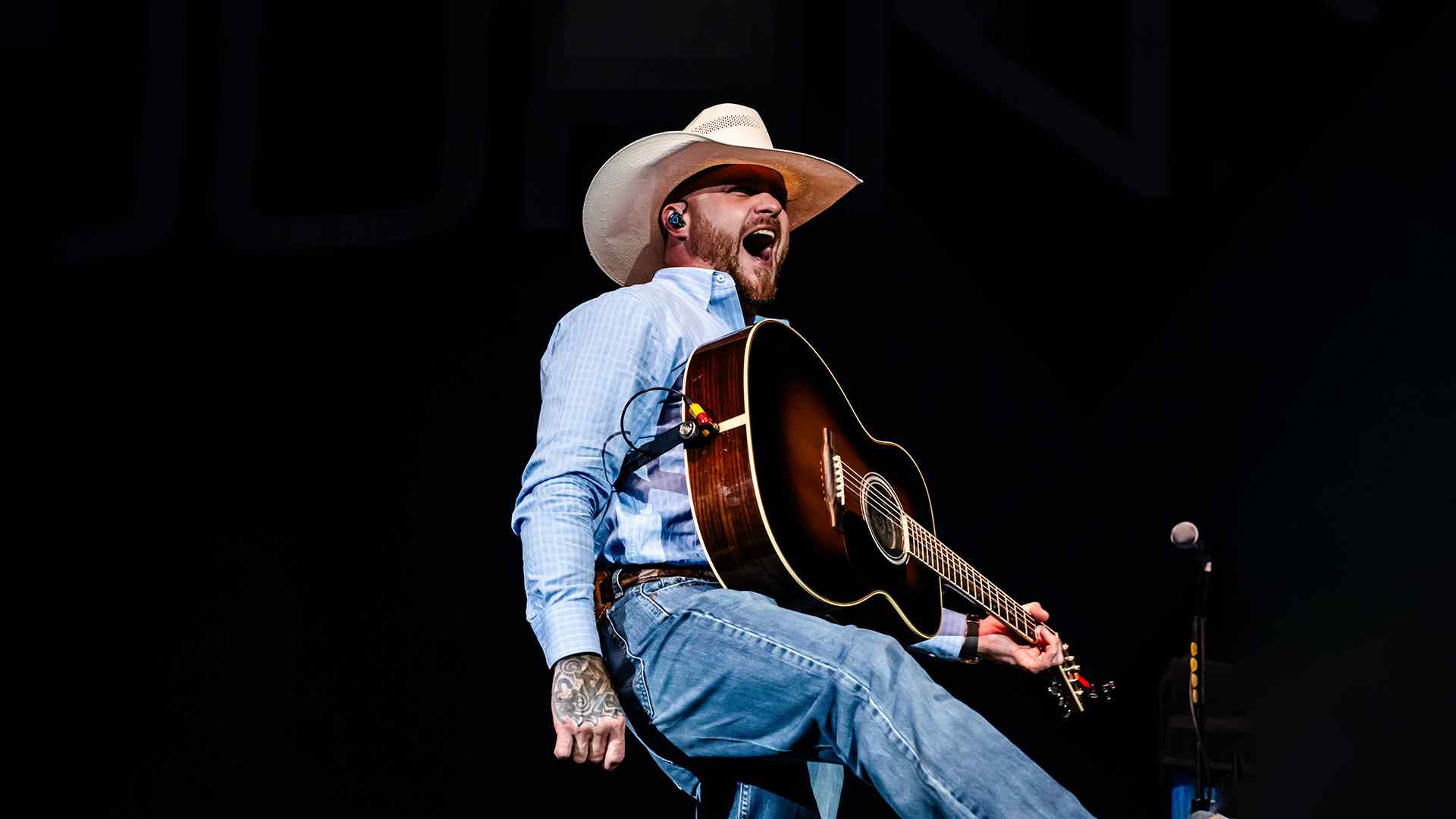
The reaction was immediate, as laughter and applause rolled through the stadium, the line landing as both a playful challenge and a sincere tribute to the artist whose presence had defined the record for years. In that moment, the narrative expanded beyond Johnson’s achievement, bringing Strait back into the conversation in a way that underscored the connection between past and present.
It was not framed as rivalry.
It was framed as respect.
That distinction became even clearer in the hours that followed, when Strait responded in a manner that reflected the same steady, grounded approach that has defined his career. There was no urgency in his words, no attempt to reclaim the spotlight, only a calm acknowledgment of the moment and what it represented.
“I’m proud of him,” Strait said. “Records are meant to be broken. What matters most is the people who show up and the music that brings them there. If the time’s right… maybe I’ll come back and see.”
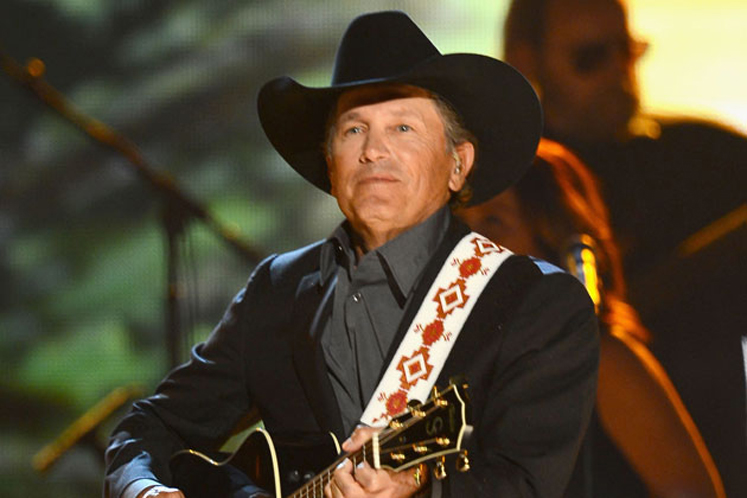
The response did not seek to compete with the moment.
It reframed it.
In a single statement, Strait shifted the focus from numbers to meaning, reminding both fans and observers that while attendance records can be surpassed, the foundation on which they are built carries a different kind of permanence. His words echoed a broader truth about his career, which has never been defined by peaks alone, but by consistency, authenticity, and a relationship with audiences that has endured across decades.
For industry observers, the exchange between Johnson and Strait offered more than a headline, providing a clear illustration of how legacy and momentum can coexist within the same space. Johnson’s achievement represented growth, energy, and the emergence of a new generation capable of filling stadiums at an unprecedented scale, while Strait’s response reinforced the idea that influence is not diminished by the passage of time.
Instead, it evolves.
The contrast between the two moments, one marked by the breaking of a record and the other by a quiet acknowledgment of it, created a narrative that extended beyond competition, highlighting the continuity that defines country music at its core. In this context, the record itself became less important than what it represented, serving as a point of connection between artists rather than a dividing line.
For fans, that continuity carries a particular significance, as it allows them to see the genre not as a series of isolated eras, but as an ongoing story shaped by those who contribute to it over time. Johnson’s performance added a new chapter, while Strait’s response provided context, grounding the moment in a legacy that remains active rather than distant.
As discussions continue to unfold, one theme remains consistent across reactions, emphasizing that while records can capture attention, they do not define the entirety of an artist’s impact. In the case of George Strait, that impact extends far beyond any single number, rooted instead in a body of work and a presence that have shaped the expectations of what country music can be.
Cody Johnson may have raised the attendance mark.
But George Strait remains the measure.
And in a night where history was rewritten, it was that balance between achievement and legacy that ultimately defined what the moment would mean long after the final note had faded.