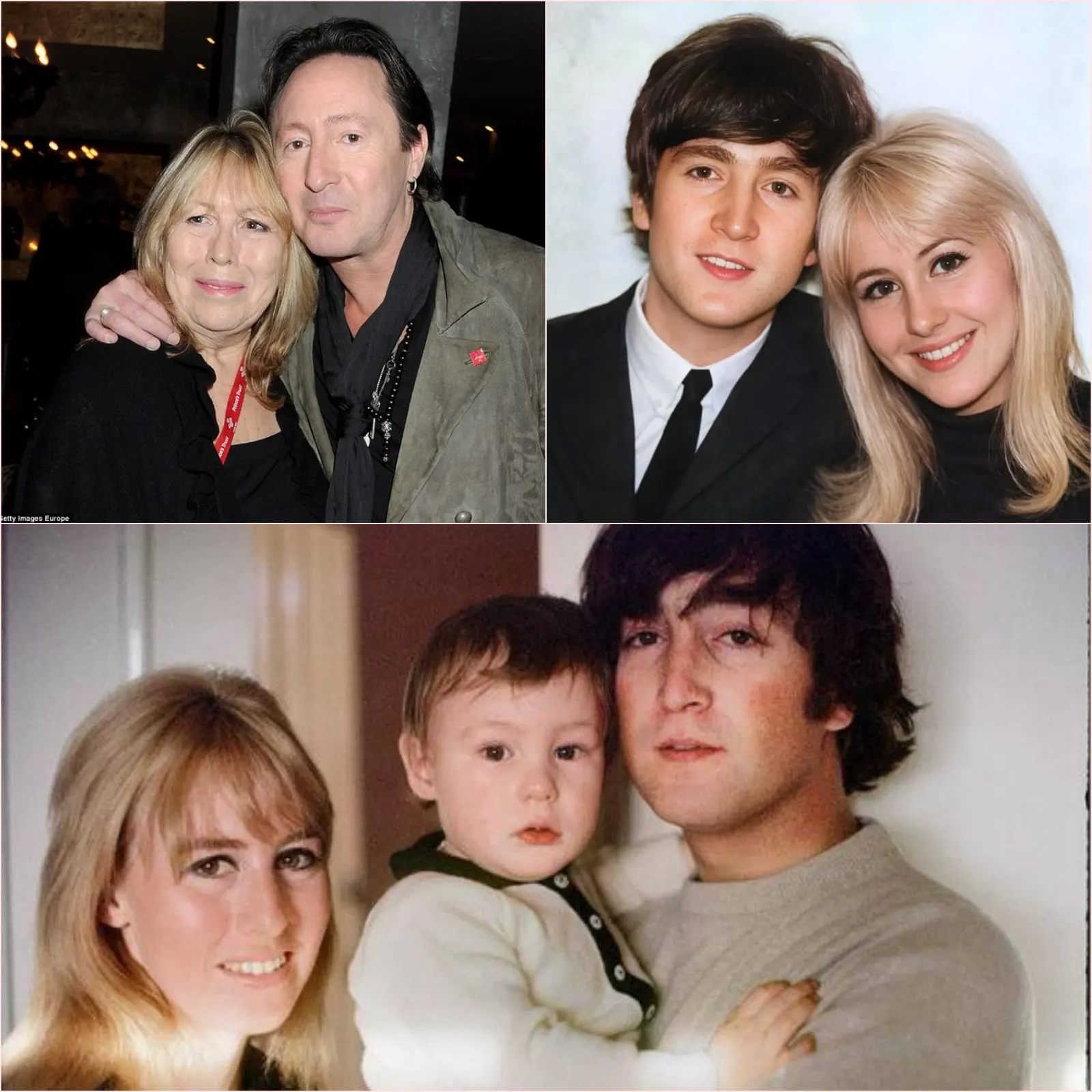
In May 1968, Cynthia Lennon returned to her home at Kenwood in Weybridge expecting to walk back into the life she had known for years. Instead, she encountered the scene that would come to symbolize the end of her marriage to John Lennon. After returning early from a holiday in Greece, Cynthia found John with Yoko Ono inside the family home. Contemporary accounts and Cynthia’s later recollections describe John and Yoko in dressing gowns, with Yoko reportedly wearing Cynthia’s. For a woman who had spent years trying to hold together a marriage increasingly strained by fame, drugs, absence and John’s growing attachment to Yoko, the meaning of what she saw was impossible to misunderstand.

One often-repeated telling of that encounter describes Cynthia responding not with screaming or destruction, but with a question so ordinary that it somehow made the moment even more painful.
“Do you want dinner?”
Whether every word of that exchange survived exactly as it happened, Cynthia’s own accounts consistently painted the discovery as a moment of humiliation and emotional shock rather than theatrical confrontation. She left the house and stayed with friends, knowing that something fundamental in her marriage had changed. John and Cynthia had met as art students in Liverpool, married in 1962 and welcomed their son Julian the following year, just as Beatlemania was beginning to transform John from a young husband into one of the most famous men alive. By 1968, the distance between the life they had started together and the world surrounding the Beatles had become enormous.
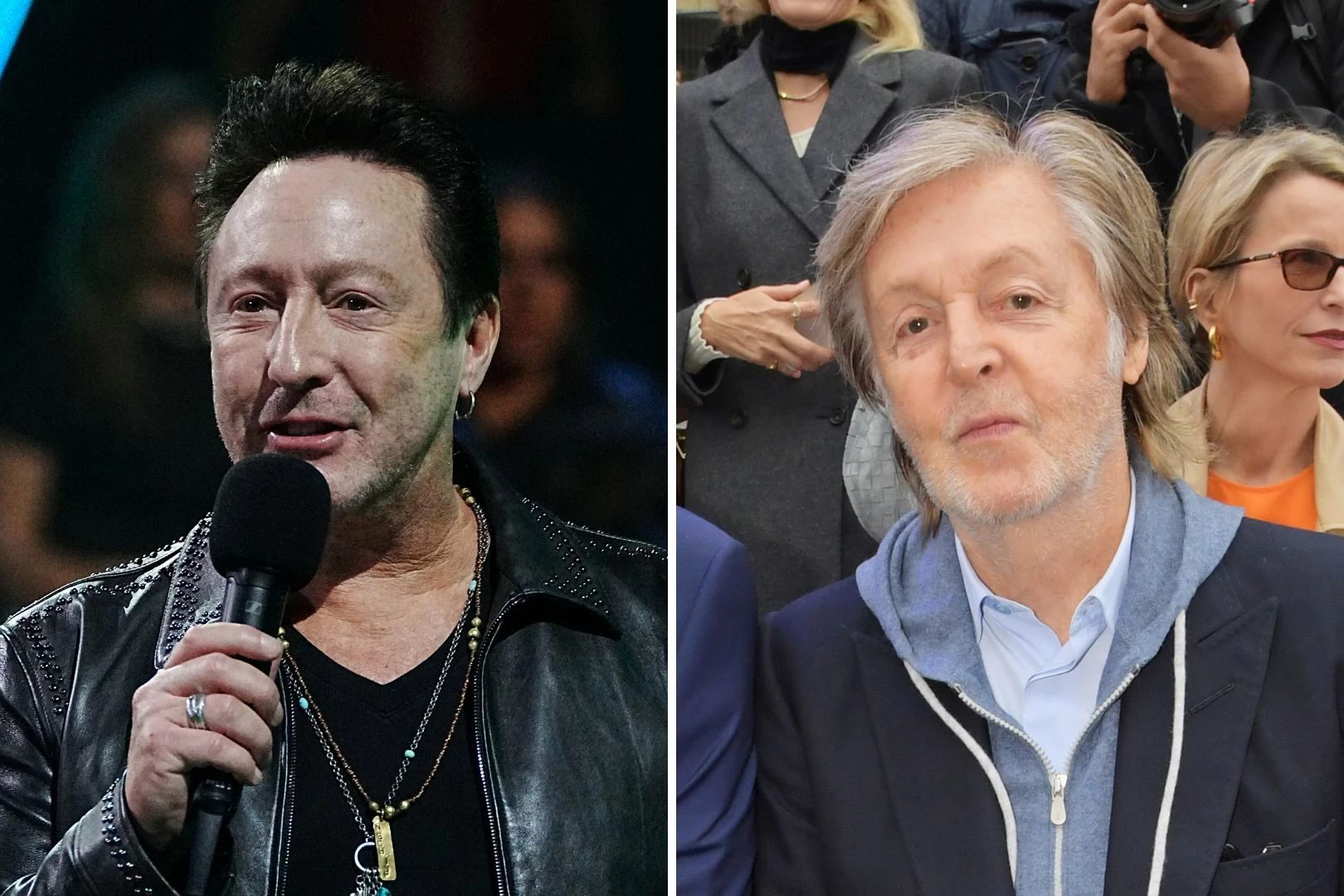
The marriage ended later that year, but Cynthia’s most important responsibility remained unchanged: Julian. While headlines followed John and Yoko into a new relationship and eventually a new life together, Cynthia focused on raising their young son away from much of the chaos surrounding the Beatles. Julian was only five when his parents separated, old enough to understand that his father was leaving but far too young to make sense of why his family had suddenly changed.
It was during that painful period that Paul McCartney made one of the most compassionate gestures in Beatles history. Paul drove out to visit Cynthia and Julian because, as he later explained, he felt uncomfortable simply allowing two people who had been part of his life for years to disappear after the separation. On the journey, he began singing words of encouragement to Julian, whom he called Jules. The song began as “Hey Jules” before becoming “Hey Jude,” a message to a child caught inside circumstances created by adults.

Cynthia never forgot the visit. She later recalled being deeply moved that Paul came to check on them when she felt discarded, even arriving with a red rose. For Julian, the song would eventually become one of the strangest and most beautiful pieces of his family history: one of the Beatles’ greatest recordings had begun because Paul was worried about how a little boy was coping with his parents’ divorce.
“Take a sad song and make it better.”
Those few words would eventually be sung by millions, but their origin was remarkably private — one friend trying to comfort another man’s child.
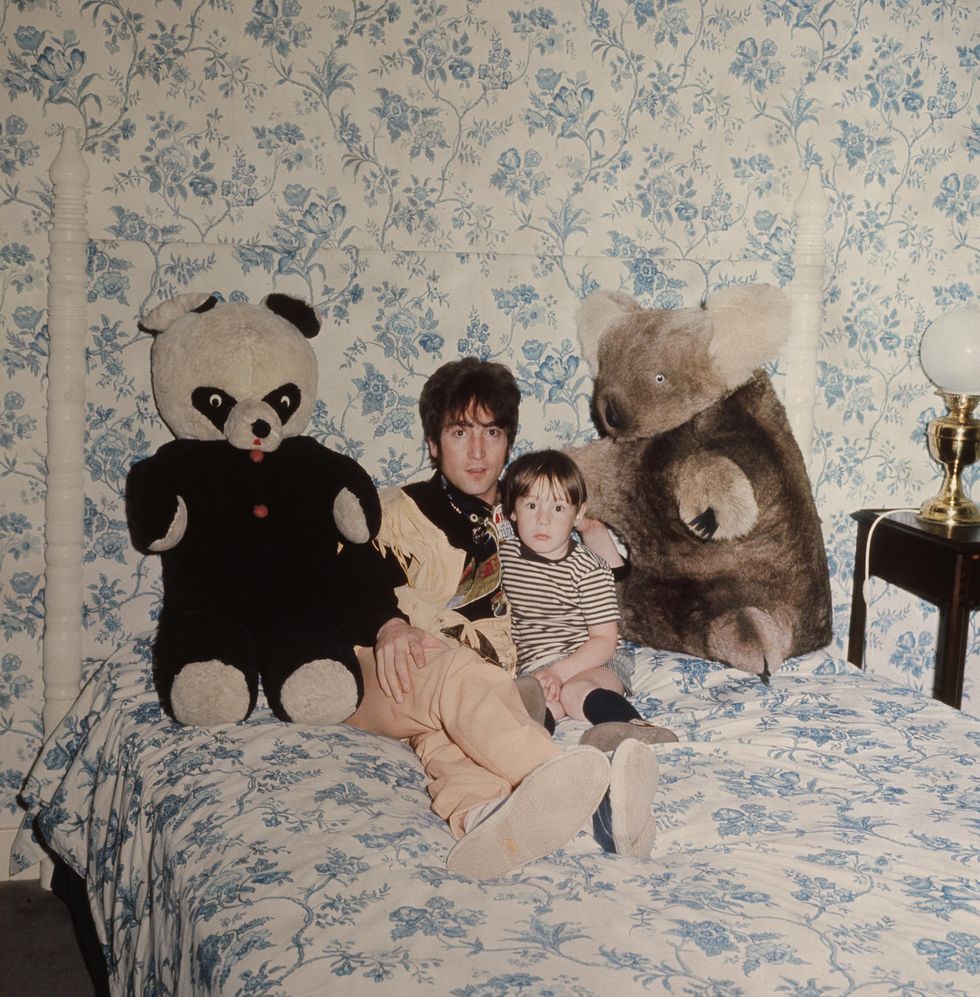
Cynthia’s life did not end with John Lennon, even though Beatles history often reduced her to the role of “John’s first wife.” She rebuilt, pursued her own creative interests and eventually wrote openly about the complicated man she had loved. Her memories contained affection alongside betrayal and disappointment, refusing to turn the past into either a perfect romance or a simple story of resentment.
When John was murdered in New York in December 1980, Cynthia grieved a man who had once been her young art-school love and who would always remain Julian’s father. The marriage had ended long before, but death has a way of reopening rooms people thought they had already closed.
Cynthia Lennon died in Mallorca on April 1, 2015, at 75 after cancer, with Julian beside her. Her story remains quieter than the mythology surrounding John, Paul, George and Ringo, yet it carries something Beatles history desperately needs: the human cost behind the legend.
Cynthia was hurt deeply, but she refused to let betrayal become the only thing that defined her. And through Julian — and through a song Paul McCartney once began on a lonely drive to comfort him — part of her story still echoes every time the world sings “Hey Jude.”