Dolly Parton has spent her entire career doing things in a way nobody else would think to do them, but even by Dolly standards, her reaction to being nominated for the Rock & Roll Hall of Fame in 2022 was extraordinary. Instead of celebrating immediately, she tried to step aside. Dolly publicly asked to withdraw her name from consideration because, in her words, she did not feel she had “earned that right” and worried that the honor should belong to artists whose lives had been built more directly around rock music.

It was classic Dolly humility, but it also revealed something deeper about how seriously she took artistic identity. She had already conquered country music, crossed into pop, become a movie star, built Dollywood and written songs that had entered American culture permanently. Yet she still looked at the Rock Hall and thought there might be someone else more deserving.
The Hall of Fame disagreed.
Voting was already underway, her name remained on the ballot, and Dolly was ultimately inducted as part of the Class of 2022. Once that happened, she seemed to arrive at a conclusion only Dolly Parton could turn into an entire creative mission: if the Rock & Roll Hall of Fame believed she belonged there, then she was going to make sure nobody could ever question it.

So she gave herself homework.
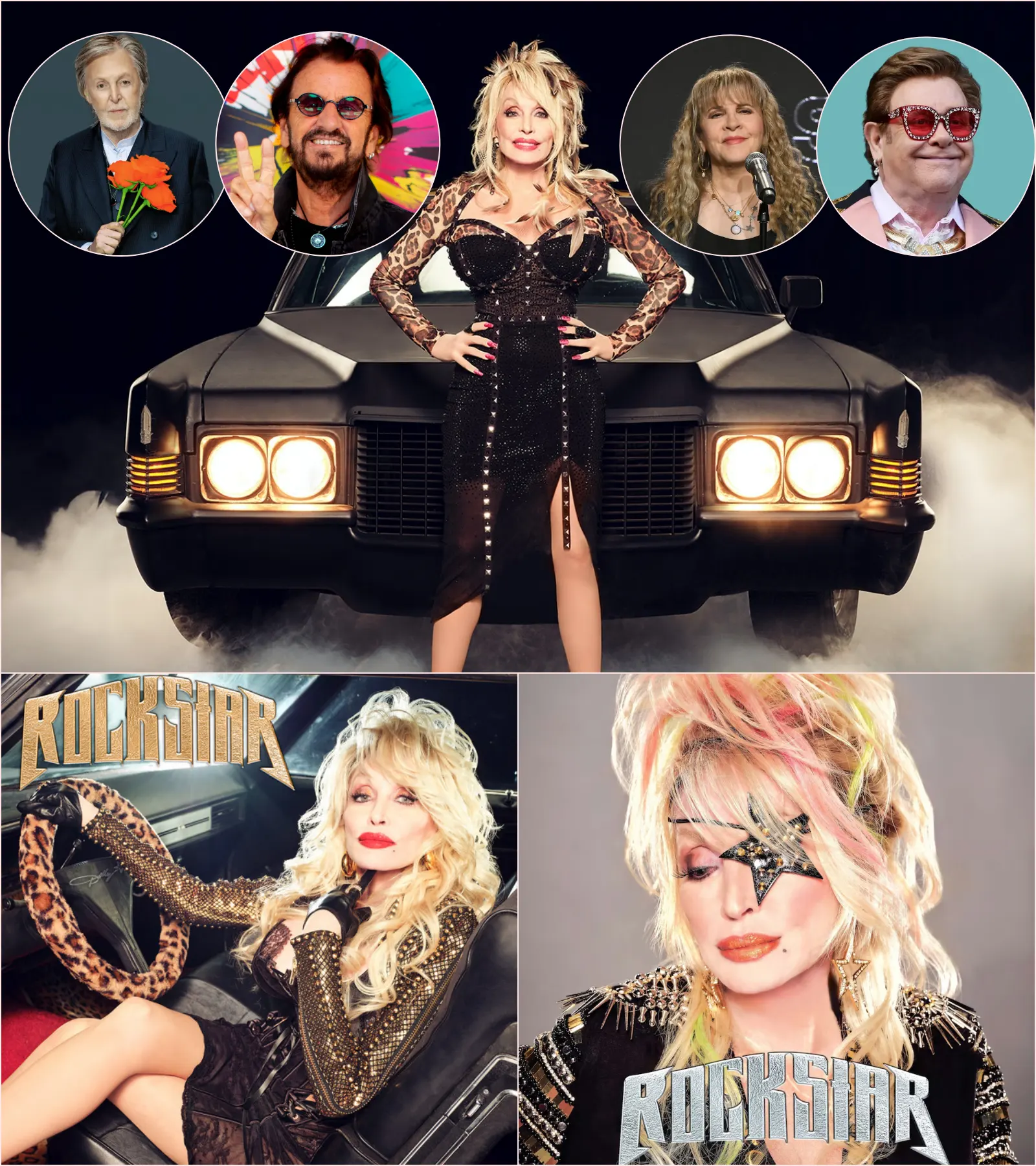
The result was Rockstar, released in November 2023 when Dolly was 77. Rather than making a cautious little side project with a few rock covers, she created a sprawling 30-track album packed with classics, originals and an almost unbelievable collection of collaborators.
Paul McCartney joined her for “Let It Be,” with Ringo Starr on drums. Elton John appeared on “Don’t Let the Sun Go Down on Me.” Stevie Nicks joined Dolly for “What Has Rock and Roll Ever Done for You.” Debbie Harry, Joan Jett, Peter Frampton, Sting, Steven Tyler, Pink, Brandi Carlile, Miley Cyrus and many others entered Dolly’s musical universe.
The guest list alone looked like a history lesson in rock music.
But the most interesting part of Rockstar was not simply who agreed to appear. It was what Dolly did with the opportunity.

She refused to treat rock music like a costume she was borrowing for one night. Her Tennessee voice remained unmistakable. The humor remained. The storytelling remained. Even when she tackled songs associated with the Beatles, the Rolling Stones, Queen or Led Zeppelin, she never tried to disappear inside the original versions.
She brought the songs into Dolly Parton’s world.
That distinction mattered because Dolly had never really been as far from rock ’n’ roll as she initially suggested. Her career was filled with crossover hits, big guitars, pop arrangements and a rebellious instinct that had been there long before the Rock Hall nomination. Leaving Porter Wagoner to build her own career, protecting her songwriting rights and refusing to let anyone else decide what Dolly Parton should be were all acts of independence that fit rock ’n’ roll perfectly.
In that sense, Rockstar became more than an album.
It was Dolly reconsidering what belonging meant.
She had spent decades thinking of herself primarily as a country artist, yet the project showed that genres were less important than the qualities underneath them: courage, individuality, great songs and the willingness to take risks even when nobody expects you to.
Most artists would have accepted the Rock & Roll Hall of Fame induction, posed for photographs and added another trophy to the shelf.

Dolly turned the honor into a challenge.
At an age when almost anyone would have understood if she wanted to slow down, she built one of the biggest projects of her career, called some of the most famous musicians alive and effectively said, “If I’m going to be here, I’m going to earn it.”
That may be the most Dolly Parton part of the entire story.
She tried to give away the honor because she was not convinced she deserved it.
Then, once the world insisted she did, she worked hard enough to prove the world right.