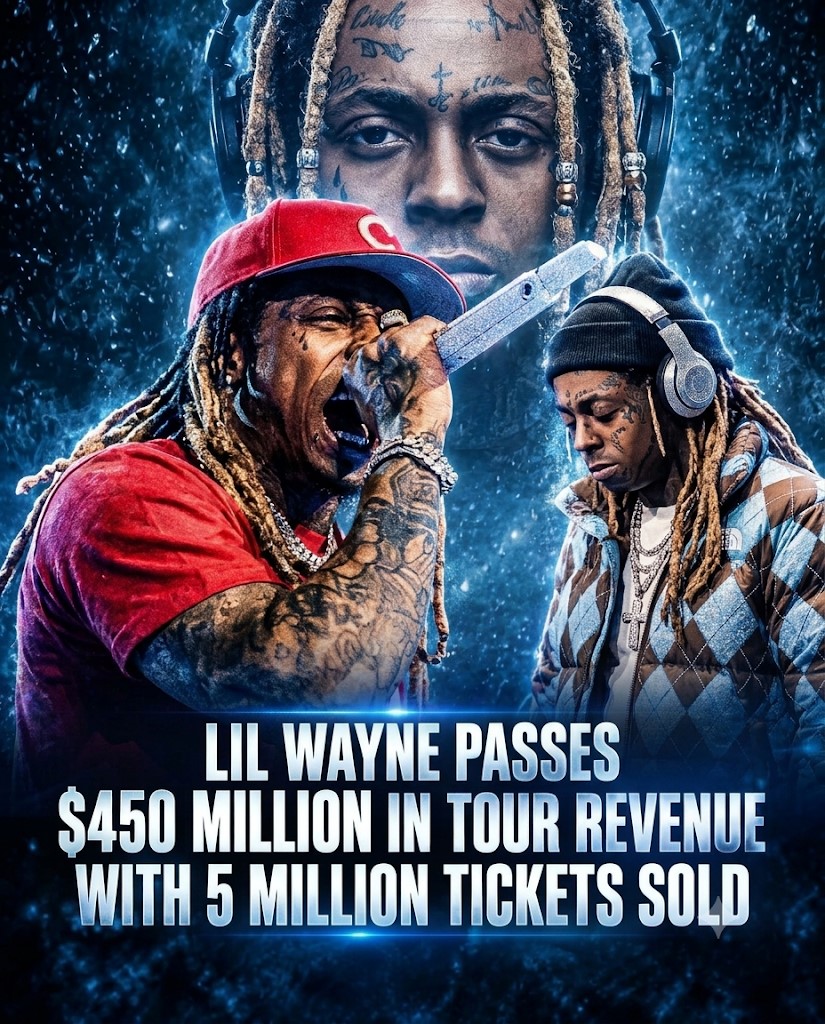
There’s a moment at a Lil Wayne show when the crowd recognizes the beat before he gets to the first word. For people who grew up with his records, that sound can bring back a whole era: the friend who always had a new mixtape, the car with the speakers turned up too high, the verse everybody tried to learn. A $450 million touring figure being shared about Wayne offers a dramatic way to talk about that following. The figure is unverified as a career total, but one documented stretch of his touring career shows just how many people were already willing to show up for Weezy.

From December 2008 through September 2009, Wayne’s North American touring grossed approximately $42 million across 78 headlining shows and drew nearly 804,000 fans, according to figures attributed to his tour producer and business manager, Shawn Gee. Those numbers cover a specific run, rather than the full span of his career. They tell a story worth hearing on their own: night after night, across arenas and amphitheaters, people were buying tickets to hear a rapper whose records already seemed to be everywhere. lilwaynehq.com

The timing helps explain what made those crowds so eager. Wayne’s music gave listeners more than one way to become a fan. Some arrived through the hits and could recognize “A Milli” from its opening beat. Others came through the mixtapes, where hearing him take on a familiar instrumental became part of the fun. The two routes could lead to the same concert, with one person waiting for a song that had been all over the radio and another hoping to hear the verse they used to rewind for their friends.
Onstage, there’s a pleasure in watching what happens when that private familiarity becomes public. Take “6 Foot 7 Foot,” a song that can leave you catching up to a punch line while the next one is already on its way. In a crowd, you can hear the people around you reach the same words at once. The rhyme you once played back because you weren’t sure you’d heard it right is suddenly the line everybody knows. That exchange is part of the appeal of seeing Wayne live: the audience gets to show him which pieces of the music it has carried all these years.

His case for greatness also rests on the way he makes a verse feel like it could turn at any moment. Wayne can let a joke interrupt a boast, stretch a word until it changes the rhythm, or use a slight pause to make the next line land harder. Those choices give the songs personality beyond their hooks. They’re also why different fans can leave the same show talking about different things. One might remember the biggest chorus of the night; another might remember a few bars that reminded them why they started listening in the first place.

Whether Wayne ranks among the greatest rappers and live performers depends partly on what you value. Technical skill matters, and so does the ability to make a room feel included in a performance. Longevity means something different again: a song has to keep giving people a reason to come back after the moment that made it a hit has passed. Wayne’s catalog gives fans plenty to argue over on all three counts, which is part of the pleasure of the debate.
The most persuasive case for Weezy may be the one fans make by showing up. A touring gross can tell you how much a run of concerts earned. The sound of a room answering the first line of a song tells you why people wanted to be there. Years after they first heard that verse, they still know exactly when to come in.